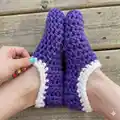
🧢 Beautiful ✨ Detailed πŸ’ Adorable

Simple Slippers Pattern

Simple Slippers Pattern
4.2β˜… Rating
2-3 Hours Time Needed
1.4K Made This
βœ‚οΈ

Beginner Friendly Level

Perfect for those just starting their crochet journey, with clear instructions and simple techniques

⏱️

Bite-Sized Project

Finishes in 2-4 hoursβ€”perfect for an afternoon of creative relaxation.

🧣

Snug Essential

Everyday comfort with practical charm, designed for both functionality and style through changing seasons.

About This Simple Slippers Pattern

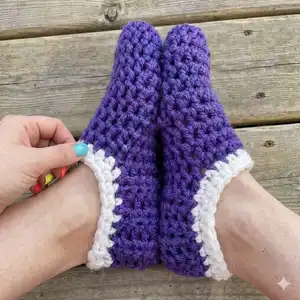
This pattern teaches you how to crochet a pair of simple, cozy slippers using bulky (5) weight yarn and a large hook. The slippers are worked from the toe in rounds, then turned into rows for the vamp and heel before finishing with a neat edge. They are quick to make and excellent for using leftover yarn scraps.

Simple Slippers Pattern crochet pattern - detailed view of completed project

Sizes 6 through 9 are included with clear round-by-round instructions and a finished edge technique. The pattern is beginner-friendly and easily adjustable to fit your yarn and tension.

Why You'll Love This Simple Slippers Pattern

I absolutely love this pattern because it turns leftover bulky yarn into warm, wearable slippers in a single afternoon. I enjoy the simple, repetitive HDC rounds β€” they are relaxing and quick so you see progress fast. The pattern is forgiving and easy to adjust, which means I can adapt it to different yarns and foot sizes without reworking everything. Making a pair always feels rewarding, and I like giving them as handmade gifts because they are practical and cozy.

Simple Slippers Pattern step 1 - construction progress Simple Slippers Pattern step 2 - assembly progress Simple Slippers Pattern step 3 - details and accessories Simple Slippers Pattern step 4 - final assembly and finishing

Switch Things Up

I love how easy these slippers are to customize: change colors every few rounds to create stripes or use a single variegated yarn for a marled look.

You can make the slippers larger or smaller by adjusting yarn weight and hook size; try bulky yarn with a larger hook for a chunky slipper or DK yarn with a smaller hook for a finer slipper.

I often add a contrasting finished edge using a smaller hook and a tighter single crochet for a crisp border that pops against the body color.

Try adding a non-slip sole by stitching on fabric paint dots or sewing on a suede fabric sole for better grip on hardwood floors.

To change the shape, experiment with the number of rows worked before seaming the heel; removing one or two rows shortens the foot and creates a snugger fit.

I like to make mini pairs as gifts by using sport weight yarn and an appropriately sized hookβ€”perfect for doll or baby slippers.

For a cozy, sock-like fit, work a few extra rounds around the ankle before finishing the edge so the slipper cups the foot more securely.

If you want a dressier slipper, add a small crocheted flower or a sewn-on button at the vamp for decoration.

Try tufting or embroidering a simple motif on the toe to personalize each pair and give them a unique, handmade look.

When testing variations, always make a small gauge swatch and measure the foot as you go to ensure the final slipper will fit comfortably.

Common Mistakes & How to Fix Them

βœ— Not checking gauge before starting might result in slippers that are too large or too small; measure a swatch (10 sts x 8 rows = 4" x 4") and adjust hook size if needed. βœ— Counting stitches incorrectly during the initial rounds will distort the shape; mark the first stitch and count after each increase round to ensure you have the correct stitch count. βœ— Forgetting that CH 1 at the beginning of each row is NOT counted as a stitch can add extra stitches; always work your first stitch into the CH 1 space as instructed. βœ— Cutting the yarn tail too short after assembling will make finishing difficult; leave a 10–12 inch tail for sewing the end together and weaving in securely. βœ— Working with inconsistent tension causes uneven rows and a poor fit; maintain steady tension and check fit often, removing rows if the slipper becomes too large.

Simple Slippers Pattern

Create cozy, quick-to-make slippers using bulky weight yarn and a large hook. This pattern uses simple half double crochet rows to shape a comfortable slipper that can be finished with a neat single crochet edge. Perfect for using up yarn scraps and making a thoughtful handmade gift.

Beginner Friendly 2-3 Hours

Materials Needed for Simple Slippers Pattern

β€” Main Fabric

  • 01
    Bulky weight yarn (5) - roughly 90 to 110 yards total (use scrap bulky yarns to create a pair)
  • 02
    Optional contrast yarn for finished edge - small amount (bulky or worsted as preferred)

β€” Tools Required

  • 01
    Crochet hook size 9mm (N)
  • 02
    Bulky weight yarn (see materials)
  • 03
    Additional crochet hooks (optional for gauge testing)
  • 04
    Scissors
  • 05
    Yarn needle for weaving in ends and seaming

Progress Tracker

0% Complete

β€” Materials :

Info :

Size 9mm/N hook. You will require roughly 90 to 110 yards bulky 5 weight yarn. Yarn, crochet hooks and scissors.

Info :

Gauge: Width: 10 ST = 4". Length: 8 RW = 4".

β€” Pattern Notes :

Info :

I always wear out my slippers so when my last pair where on the way out I quickly whipped up a new pair to wear. These slippers are quick and easy and I am thrilled with how cozy they are.

Info :

The CH 1 at the beginning of each row will NOT be counted as a stitch. However, you will also work your first stitch in the CH 1 Space.

Info :

If you find the size you are working on is to big remove 1 or 2 rows before you start working on the heel. You may also remove 1 or 2 rows from the heel. Depending on the bulky yarn you choose to work with you may have to make small adjustments. Feel free to contact me at anytime if you need some extra guidance in sizing.

β€” Size 6 :

Round 1 :

10 HDC in magic circle, SL ST to the 1st ST

Round 2 :

CH 1, 2 HDC in the same ST as CH 1, HDC in next ST, *2 HDC in next ST, HDC in next ST, RPT from * all around, SL ST to 1ST HDC, (15)

Round 3 :

CH 1, 2 HDC in the same ST as CH 1, HDC in next 2 STs, *2 HDC in next ST, HDC in next 2 STs, RPT from * all around, SL ST to 1ST HDC, (20)

Round 4 :

CH 1, HDC each ST around, SL ST to 1ST HDC (20)

Round 5-9 :

RPT RND 4

Row 10 :

CH 1, HDC into the next 14 (14)

Row 11 :

CH 1, turn your work so you are now working back across your work, HDC across (14)

Row 12-15 :

RPT RW 13

Info :

Cut yarn leaving 10 – 12 inch tail. Flip slipper inside out and SL ST the end together. Weave in all ends.

β€” Finished Edge (Size 6) :

Round 1 :

Starting at the back of the slipper SL ST yarn on SC 23 STs evenly around, SL ST to 1ST SC (23)

Round 2 :

SC in each ST around, SL ST to 1ST SC, Cut yarn, weave in end (23)

β€” Size 7 :

Round 1 :

10 HDC in magic circle, SL ST to the 1st ST

Round 2 :

CH 1, 2 HDC in the same ST as CH 1, HDC in next ST, *2 HDC in next ST, HDC in next ST, RPT from * all around, SL ST to 1ST HDC, (15)

Round 3 :

CH 1, 2 HDC in the same ST as CH 1, HDC in next 2 STs, *2 HDC in next ST, HDC in next 2 STs, RPT from * all around, SL ST to 1ST HDC, (20)

Round 4 :

CH 1, HDC each ST around, SL ST to 1ST HDC (20)

Round 5-10 :

RPT RND 4

Row 11 :

CH 1, HDC into the next 14 (14)

Row 12 :

CH 1, turn your work so you are now working back across your work, HDC across (14)

Row 13-17 :

RPT RW 13

Info :

Cut yarn leaving 10 – 12 inch tail. Flip slipper inside out and SL ST the end together. Weave in all ends.

β€” Finished Edge (Size 7) :

Round 1 :

Starting at the back of the slipper SL ST yarn on SC 24 STs evenly around, SL ST to 1ST SC (24)

Round 2 :

SC in each ST around, SL ST to 1ST SC, Cut yarn, weave in end (24)

β€” Size 8 :

Round 1 :

10 HDC in magic circle, SL ST to the 1st ST

Round 2 :

CH 1, 2 HDC in the same ST as CH 1, HDC in next ST, *2 HDC in next ST, HDC in next ST, RPT from * all around, SL ST to 1ST HDC, (15)

Round 3 :

CH 1, 2 HDC in the same ST as CH 1, HDC in next 2 STs, *2 HDC in next ST, HDC in next 2 STs, RPT from * all around, SL ST to 1ST HDC, (20)

Round 4 :

CH 1, HDC each ST around, SL ST to 1ST HDC (20)

Round 5-11 :

RPT RND 4

Row 12 :

CH 1, HDC into the next 14 (14)

Row 13 :

CH 1, turn your work so you are now working back across your work, HDC across (14)

Row 14-19 :

RPT RW 13

Info :

Cut yarn leaving 10 – 12 inch tail. Flip slipper inside out and SL ST the end together. Weave in all ends.

β€” Finished Edge (Size 8) :

Round 1 :

Starting at the back of the slipper SL ST yarn on SC 25 STs evenly around, SL ST to 1ST SC (25)

Round 2 :

SC in each ST around, SL ST to 1ST SC, Cut yarn, weave in end (25)

β€” Size 9 :

Round 1 :

10 HDC in magic circle, SL ST to the 1st ST

Round 2 :

CH 1, 2 HDC in the same ST as CH 1, HDC in next ST, *2 HDC in next ST, HDC in next ST, RPT from * all around, SL ST to 1ST HDC, (15)

Round 3 :

CH 1, 2 HDC in the same ST as CH 1, HDC in next 2 STs, *2 HDC in next ST, HDC in next 2 STs, RPT from * all around, SL ST to 1ST HDC, (20)

Round 4 :

CH 1, HDC each ST around, SL ST to 1ST HDC (20)

Round 5-13 :

RPT RND 4

Row 14 :

CH 1, HDC into the next 14 (14)

Row 15 :

CH 1, turn your work so you are now working back across your work, HDC across (14)

Row 16-20 :

RPT RW 13

Info :

Cut yarn leaving 10 – 12 inch tail. Flip slipper inside out and SL ST the end together. Weave in all ends.

β€” Finished Edge (Size 9) :

Round 1 :

Starting at the back of the slipper SL ST yarn on SC 26 STs evenly around, SL ST to 1ST SC (26)

Round 2 :

SC in each ST around, SL ST to 1ST SC, Cut yarn, weave in end (26)

β€” Finishing Notes :

Info :

I hope you enjoy making these slippers as much as I do! Have fun using up all your scrap yarn and make some cozy slippers. Please note that you are welcome to sell your finished products.

Assembly Instructions

  • Flip slipper inside out and SL ST the end together using the 10–12 inch tail, aligning the edges so the toe seam is neat and secure.
  • Weave in all yarn ends securely with a yarn needle after seaming so the slipper holds its shape and the ends are hidden.
  • For the finished edge, start at the back of the slipper and SL ST yarn on the number of SCs indicated (23–26 depending on size) evenly around, then SL ST to the first SC.
  • After the edge round, SC in each stitch around and SL ST to the first SC, cut yarn and weave in ends to finish the slipper edge cleanly.
  • Try the slipper on as you work the rows for the vamp and heel; if the slipper is too large, remove 1 or 2 rows before working on the heel to adjust the fit.

Important Notes

  • πŸ’‘The CH 1 at the beginning of each row is not counted as a stitch; work the first stitch in the CH 1 space as instructed.
  • πŸ’‘Leave a 10–12 inch tail when cutting yarn before seaming so you have enough to join the slipper securely.
  • πŸ’‘Check gauge before starting; 10 stitches = 4" and 8 rows = 4" will help ensure the finished slipper fits as expected.
  • πŸ’‘If the slipper is too big, reduce 1 or 2 rows from the vamp or the heel as needed for a better fit.

Thank you for choosing this Simple Slippers pattern β€” I hope they keep your toes warm and your heart happy. Make them in bold colors or neutral scraps for a cozy, handmade touch. Happy crocheting and enjoy gifting or selling your finished slippers! 🧢🧦

You ask,

we answer.

FAQs

What size will the finished piece be?

Finished slipper size will vary with yarn and tension; the pattern includes guidance for Sizes 6 through 9 when using bulky 5 yarn and a 9mm hook.

Can I use different yarn weights for this pattern?

You can use different yarn weights but this will change the final size; adjust your hook size and stitch counts as necessary and recheck gauge.

Do I need prior crochet experience for this pattern?

This pattern is beginner friendly and uses basic stitches like HDC and SC; familiarity with working in rounds and turning rows is helpful.

How long does this project typically take to complete?

This project typically takes 2-3 hours to complete, depending on your speed and whether you make adjustments for sizing.

Can I sell slippers made from this pattern?

Yes β€” the pattern notes state you are welcome to sell your finished products.