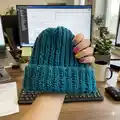
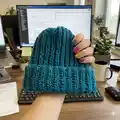
About This Winter is Coming Beanie Pattern
This pattern creates a classic ribbed beanie worked flat and seamed to form a tube, inspired by the fisherman\'s rib stitch. It\'s fully customizable so you can adjust the circumference and height to fit any head. The technique uses HDC worked through the back loop to create deep ribs and stretchy texture.
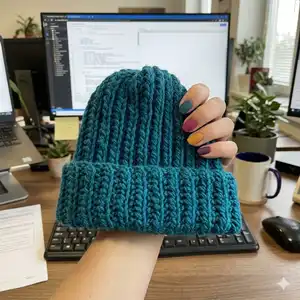
Suitable for beginners, it only uses basic stitches and straightforward seaming to finish. Make it with bulky yarn and an 8 mm hook for squishy ribs or try thinner yarn for a smaller, finer hat.
Why You'll Love This Winter is Coming Beanie Pattern
I absolutely love this pattern because it produces a beautifully textured hat with minimal stitches and fuss. I enjoy how easy it is to adapt the width and height to fit any head size, making it incredibly versatile. The fisherman\'s rib-like effect created by HDC in the back loop gives the beanie a professional, cozy finish that always gets compliments. Working it flat and seaming it makes the construction approachable and relaxing for a quiet afternoon of crocheting. I find it satisfying to watch the ribs emerge row by row — it\'s a simple stitch repeat with a high-impact result.
Switch Things Up
I love customizing this beanie by changing yarn weight and hook size; a bulky yarn with an 8 mm hook creates a thick, slouchy rib while a DK yarn with a smaller hook makes a neater, snug hat.
I often change the number of foundation chains to adjust circumference; measure the head and subtract a few centimeters for stretch to get the perfect fit.
I sometimes add a folded cuff by making the rectangle slightly longer and folding up the bottom before joining to create a double-layer brim for extra warmth.
I like to experiment with color: try striping every 4 rows for subtle bands or use two colors alternating each row for a tweed-like effect.
For a more finished look, I occasionally sew a small leather patch or crochet a tiny flower to stitch to the cuff as a personalized accent.
Want a pom-pom? I recommend making a large faux-fur pom-pom and attaching it securely to the top after gathering the crown for a playful finish.
If you prefer a more fitted beanie, reduce the initial chain by two to four stitches and work fewer rows to shorten the height before seaming.
I sometimes add a lining using a knitted or felted fabric for extra wind protection; cut the lining tube slightly smaller to fit snugly inside the crocheted tube.
To make a matching set, I scale the chain length proportionally for child or toddler sizes and keep the same row pattern for consistent texture across sizes.
I also like to use variegated yarns for quick visual interest — the rib texture shows color changes beautifully without extra effort.
Common Mistakes & How to Fix Them
✗ Not measuring the initial chain length correctly can result in a beanie that is too small or too large; measure your head and chain to the recommended circumference (about 35 cm) before starting and adjust the number of chains accordingly.
✗ Skipping HDC in the back loop will remove the ribbed effect and change gauge; be sure to work half double crochet through the back loop for every row except the final joining row.
✗ Failing to join the two sides carefully can produce an uneven seam or puckering; sew or slip stitch the two vertical edges with consistent tension and line up stitches before fastening off.
✗ Not tightening the final gathered top securely may cause the crown to come loose over time; pull the yarn through the remaining stitches, tighten firmly and fasten off securely to close the top.