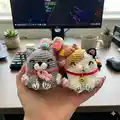
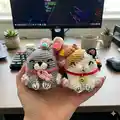
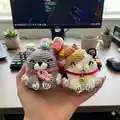
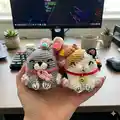
About This Reversible Cat Amigurumi Pattern
This instruction sheet shows how to join two finished chibiscraft cat amigurumi into a single reversible cat. It explains the knotting, insertion, and sewing steps needed to attach both pieces securely and neatly. The technique requires only basic sewing tools and the long yarn tail from one cat to finish the join. Clear photos and concise steps make the process easy to follow.
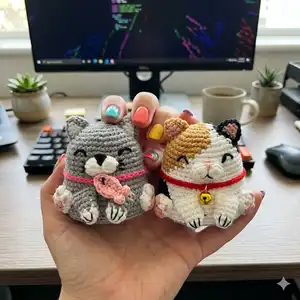
You will learn how to align faces, sew through back loops, and hide the yarn tail for a tidy finish. These joining instructions assume you already have two completed cat amigurumi pieces (Cat A and Cat B).
Why You'll Love This Reversible Cat Amigurumi Pattern
I absolutely love this joining technique because it transforms two separate amigurumi into a single reversible companion that delights with two expressions. I enjoy how simple knotting and sewing can produce a surprising reversible effect without complex construction. The method is efficient and keeps the pieces neat, making the finished toy look very professional. I always recommend checking alignment before final sewing — it saves time and ensures the faces line up perfectly.
Switch Things Up
I love customizing this joining method by changing yarn colors so each side of the reversible cat has a totally different personality.
I sometimes use a slightly different textured yarn for Cat A to create contrast when flipped, which makes the reversible effect more dramatic.
I have experimented with adding tiny embroidered details on only one side so the two faces feel unique when reversed.
If I want a softer look I choose pastel shades and smaller hooks; for a chunkier reversible toy I use bulky yarn and a larger hook.
I also like to swap the knot location or hide it inside an accessory, such as a tiny collar or bell, to add functionality to the join.
For a sturdier finish I reinforce the joining seam with a second row of whipstitches through the back loops to prevent gaps over time.
I sometimes add a small inner lining or thin felt strip around the seam inside Cat B to protect the stitches and help the join hold its shape.
To make a keychain version I reduce the size by using thinner yarn and a smaller hook and join the pieces the same way, then add a keyring to the collar.
I encourage trying different face placements before stitching — slight changes in eye spacing or mouth position can create very different expressions.
Finally, I like to finish by weaving the tail end into several internal stitches so it stays hidden and secure, making the reversible cat neat and long-lasting.
Common Mistakes & How to Fix Them
✗ Tying the knot too close to the pieces can create bulk and uneven joining; leave about 1-2 cm between the knots to allow for neat insertion and alignment.
✗ Forgetting to turn cat B right side out before inserting cat A can leave the faces misaligned; always turn cat B back with the right/good side facing you before pushing cat A inside.
✗ Skipping the use of the long yarn tail from Cat B for sewing will make finishing more difficult; use Cat B's long yarn tail and sew through the back loops for a secure join.
✗ Not lining up both faces before sewing leads to asymmetry and an unbalanced final look; pin or visually align the faces and check placement before stitching the last rounds.