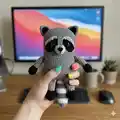
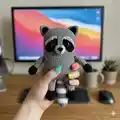
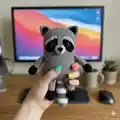
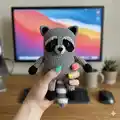
About This Rac the Raccoon Amigurumi Pattern
This pattern creates a stretchy raccoon toy with a square body, movable long limbs, a striped tail, and adorable facial features. You will crochet each limb and body panel, then join and decorate the toy for a playful finished piece. The design emphasizes simple shaping and clever assembly to create the stretchy limb effect.
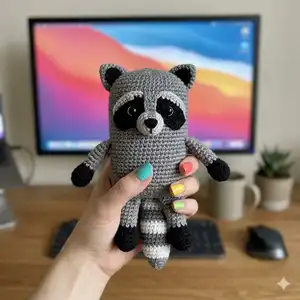
Follow clear rounds for all parts: arms/legs, ears, snout, eyes, tail and body, plus step-by-step assembly. Ideal for gifting or play, this toy measures about 27 cm from ears to feet using the recommended yarn.
Why You'll Love This Rac the Raccoon Amigurumi Pattern
I absolutely love this pattern because it combines simple amigurumi techniques with a playful stretchy-limb concept that kids adore. I enjoy how the square body and long limbs give the raccoon a quirky, huggable personality. I love that each part is small and quick to make, yet comes together to form a charming finished toy. I also appreciate the pattern's clear instructions for joining panels and inserting limbs which makes assembly satisfying and reliable.
Switch Things Up
I love how easy it is to change the personality of this raccoon by switching colors; try pastel greys or warm browns for a softer look.
I often use a slightly thicker yarn and larger hook to make a chunkier, cuddlier version for a bigger gift.
You can make a mini version using finer yarn and a 1.75–2.0 mm hook for keychain-sized raccoons.
I sometimes embroider different facial expressions or add tiny crocheted eyebrows to change the mood of the toy.
Try swapping safety eyes for embroidered eyes if you are making the toy for very young children to keep it toy-safe.
For posable limbs, insert a short length of flexible wire into the limb shafts before stuffing to allow gentle posing.
Add small accessories like a crocheted scarf, hat, or tiny vest to personalize the raccoon for gifts or holidays.
Experiment with striping patterns on the tail — narrower or wider stripes change the visual impact significantly.
Use variegated yarn for a marbled body effect, or contrast the inner ear color for extra detail.
I recommend trying different stuffing levels in the limb shafts to see how it affects the stretch and playability; lighter stuffing equals more stretch.
Common Mistakes & How to Fix Them
✗ Skipping stitch markers during assembly can make panel alignment difficult; place markers at corner stitches and key joining points to keep edges matched.
✗ Overstuffing the limbs will make them stiff and reduce stretch; stuff the round ends firmly but leave the long grey shafts barely stuffed for elasticity.
✗ Changing yarn color without securing the previous tail can cause unraveling; weave in or secure color joins before continuing to avoid loose ends.
✗ Forgetting to count rows when placing eyes and snout results in misplaced facial features; mark rows 12-13 for the snout and rows 16-22 for eye placement before sewing.
✗ Crocheting too tightly on the long limb shafts may prevent smooth stretching; maintain a relaxed, consistent tension for the shafts so they remain flexible.