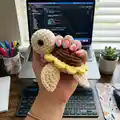
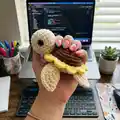
🧶 Beautiful ✨ Detailed 💝 Adorable

Mini Sunflower Turtle Amigurumi Pattern

Mini Sunflower Turtle Amigurumi Pattern
4.9★ Rating
5-7 Hours Time Needed
2.6K Made This
✂️

Intermediate Level

Ideal for those with basic crochet experience, featuring slightly more advanced stitches and techniques to expand your skills.

⏱️

Weekend Treat

Takes 5-7 hours, making it an enjoyable project to finish over a couple of days.

🐥

Charming Critter

Delightful animal designs with sweet details that capture the essence of your favorite woodland and farmyard friends.

About This Mini Sunflower Turtle Amigurumi Pattern

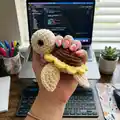
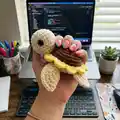
This pattern creates a tiny sunflower-shelled turtle using bulky, velvety yarn for a plush, tactile finish. Youll work small amigurumi pieces — legs, tail, head, and a textured sunflower shell — and assemble them into a cuddly toy. The pattern uses US terms and includes step-by-step rounds and helpful photos for placement.
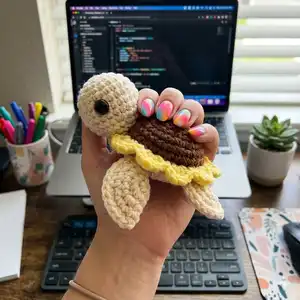
Mini Sunflower Turtle Amigurumi Pattern crochet pattern - detailed view of completed project

Perfect for intermediate crocheters who want a quick weekend project with cute results. The sunflower petal round adds charming detail and personality to this mini turtle.

Why You'll Love This Mini Sunflower Turtle Amigurumi Pattern

I absolutely love this pattern because the sunflower shell detail brings so much personality to a classic amigurumi turtle. I enjoyed combining two yarn textures to make the shell and petals stand out while keeping the body soft and cuddly. The shaping is clever but not overwhelming, so I can create a polished little toy in a few focused sessions. I also love that the legs and tail are crocheted and then attached directly, which makes assembly neat and secure. This pattern always makes me smile when the petals pop into place during the color change.

Mini Sunflower Turtle Amigurumi Pattern step 1 - construction progress Mini Sunflower Turtle Amigurumi Pattern step 2 - assembly progress Mini Sunflower Turtle Amigurumi Pattern step 3 - details and accessories Mini Sunflower Turtle Amigurumi Pattern step 4 - final assembly and finishing

Switch Things Up

I love changing colors to create different moods — try pastel petals for a softer look or bright neons for a playful twist.

I often change yarn weight and hook size to make larger or smaller versions; using a bulky yarn gives a plush, huggable turtle while thinner yarn makes a tiny keychain-friendly version.

I like to swap the safety eyes for embroidered eyes or buttons for a more handmade, washable toy option.

I sometimes embroider a smiling mouth or freckles to give each turtle unique expressions and personality.

For a different texture, I use loop or boucle yarn for the body so the shell looks even more distinct against a fuzzy body.

I add wire to the legs for posability if I want a display piece that can hold a pose on a shelf.

To make a set, I change petal counts and colors so each turtle has a slightly different sunflower — it looks great as a grouped display.

I like to add tiny accessories like a crocheted bow or a miniature scarf to personalize gifts and match seasons.

Sometimes I use metallic or glitter yarn for a subtle sparkle in the petals for a special-occasion version.

I recommend experimenting with eye placement and spacing — moving the eyes slightly can change the face from shy to cheeky, and I try variations before committing to sewing.

Common Mistakes & How to Fix Them

✗ Not using stitch markers with fluffy or chunky yarn can make rounds hard to track; use stitch markers in key rounds to mark the start and any special loop rows for easy counting. ✗ Forgetting to stuff gradually results in lumps or a flat shape; stuff the head and body in small amounts while shaping to achieve smooth, even firmness. ✗ Skipping placement photos or not pinning parts can cause misaligned features; pin pieces in place and check symmetry before sewing to maintain proper positioning. ✗ Not leaving a long tail for the head makes sewing difficult and insecure; leave a long yarn tail (about a foot) when finishing the head so you can sew it securely in place.
Mini Sunflower Turtle Amigurumi Pattern

Make a charming mini sunflower turtle that doubles as a sweet decor piece or a cuddly gift. This pattern walks you through each part — legs, tail, head, body and the sunflower shell — using bulky, fluffy yarn for a soft, plush finish. Youll learn simple shaping, a sunflower petal round, and secure attachment techniques to create a durable, adorable turtle. Perfect for gifting or keeping as a tiny handmade treasure.

Intermediate 5-7 Hours

Materials Needed for Mini Sunflower Turtle Amigurumi Pattern

— Main Fabric

  • 01
    Yarn Bee Velvety Smooth - Ivory (size 5) - for head, legs, tail and body accents (use as needed)
  • 02
    Premier Just Chenille - Yellow (size 6) - for sunflower petals (use as needed)
  • 03
    Premier Just Chenille - Cocoa (size 6) - for shell center (use as needed)
  • 04
    Bulky yarn (size 5 or 6) in coordinating colors as preferred

— Tools Required

  • 01
    Crochet hook size 3.5mm (E-5)
  • 02
    Tapestry needle
  • 03
    Scissors
  • 04
    Safety eyes 12mm (2 pieces)
  • 05
    Poly-Fil stuffing
  • 06
    Stitch markers (recommended for fluffy yarn)
  • 07
    Pins for assembly

Progress Tracker

0% Complete

— Supplies :

Info :

Hook: 3.5mm/E-5. Yarn: Size 5 and/or 6 Bulky yarn. I used Yarn Bee Velvety Smooth - Ivory (size 5). Premier Just Chenille - Yellow and Cocoa (size 6). Note: The Premier Just Chenille yarn is very similar in size to the Yarn Bee brand used, it is not a super bulky yarn. Tapestry Needle. Scissors. Safety Eyes: 12mm. Poly-Fil for stuffing.

Info :

Finished Size: Approximately 6 inches long, 6 inches wide, 2 inches tall

Infos :

Abbreviations (US Terms): MR: Magic Ring. CH: Chain. SC: Single Crochet. TC: Triple Crochet. INC: Increase. DEC: Decrease. FLO: Front Loops Only. BLO: Back Loops Only. SK: Skip. SlSt: Slip Stitch. St: Stitch. R: Row. BO: Bind Off. (#): # of stitches in the round. Note: If you are not used to using “Fluffy/Chunky” yarn, I suggest using stitch markers to help you find your stitches and/or rows until you have practiced enough to be able to “feel” for them.

— Front Legs :

Info :

Using Ivory Yarn (Make 2)

Round 1 :

6SC in MR

Round 2 :

Inc (12)

Round 3 :

SC, Inc (18)

Round 4 :

2SC, Inc (24)

Info :

SlSt into next St. Fold your circle in half to make a half circle, SC around the half circle through both stitches.

Info :

SlSt into the last stitch, BO, weave in the yarn tail. You do not need to leave a tail for sewing, it will be single crocheted into the body later.

— Back Legs :

Info :

Using Ivory Yarn (Make 2)

Round 1 :

6SC in MR

Round 2 :

Inc (12)

Round 3 :

SC, Inc (18)

Round 4 :

2SC, Inc (24)

Info :

SlSt into next St. Fold your circle in half to make a half circle, SC around the half circle through both stitches.

Info :

SlSt into the last stitch, BO, weave in the yarn tail. You do not need to leave a tail for sewing, it will be single crocheted into the body later.

— Tail :

Info :

Using Ivory Yarn

Round 1 :

3SC in MR

Round 2 :

Inc (6)

Round 3-4 :

SC (6)

Info :

SlSt into the last stitch, BO, weave in the yarn tail. You do not need to leave a tail for sewing, it will be single crocheted into the body later.

— Head :

Info :

Using Ivory Yarn

Round 1 :

8SC in MR

Round 2 :

Inc (16)

Round 3 :

SC, Inc (24)

Round 4 :

3SC, Inc (30)

Round 5-6 :

SC (30)

Round 7 :

3SC, Dec (24)

Round 8 :

SC, Dec (16)

Round 9 :

SC (16)

Info :

SlSt and leave a pretty long tail for sewing (I leave about a foot of yarn)

Info :

Add Safety Eyes and stuffing. I added my safety eyes between row 4 and 5, about 8 stitches apart.

— Body :

Info :

Using Brown Yarn

Round 1 :

8SC into MR

Round 2 :

Inc (16)

Round 3 :

SC, Inc (24)

Round 4 :

3SC, Inc (30)

Round 5 :

4SC, Inc (36)

Round 6 :

3SC, Inc (45)

Info :

Color change to Yellow yarn using your preferred method

Round 7 :

Working in FLO (You may want to put stitch markers in the back loops so you can find them in the next round) 5SC, [(SC, TC, TC2*, TC, SC) x 7], 5SC (52) *Triple crochet two times in one stitch

Info :

Color change to Ivory yarn using your preferred method

Round 8 :

SC into BLO of R6 where you placed your stitch markers (45)

Round 9 :

This is the row you will crochet the legs and tail into. When attaching, push your hook through the stitch(s) of the leg or tail first, then through the stitch of the body and complete your single crochet. - 5SC - Grab the first big leg, attach using 3SC (refer to photo for placement, the curve of the leg should be on your right) - 5SC - Grab the first small leg, attach using 2SC (refer to photo above for placement, the curve of the leg should be on your right) - 6SC - Grab your tail and attach using 3SC (see photo for placement) - 6SC - Grab the second small leg, attach using 2SC (refer to photo below for placement, the curve of the leg should be on your left) - 5SC - Grab the second big leg, attach using 3SC (refer to photo below for placement, the curve of the leg should be on your left)

Info :

- 5SC (45). You are working clockwise in the direction of the red arrow in the left photo above.

Round 10 :

3SC, Dec (36)

Round 11 :

2SC, Dec (27)

Info :

Stuff the body to your desired firmness

Round 12 :

SC, Dec (18)

Round 13 :

Dec (9)

Info :

Add stuffing again if necessary

Info :

SlSt, cut yarn leaving a short tail to sew the hole closed. Weave the yarn tail back and forth into the stitches around then pull tight to close. Tie to secure and weave the rest of the yarn tail into the body.

Info :

- Sew on the head, placing it between the two front legs. I like to place the head over 3-4 rows of the shell and 1-2 rows of the bottom body. To make it easier and keep placement even, I use long sewing pins to pin it to the body in place.

Assembly Instructions

  • Attach safety eyes between head rounds 4 and 5, approximately 8 stitches apart, before stuffing the head.
  • When crocheting Round 9 of the body, attach legs and tail by pushing your hook through the leg or tail stitches first, then through the body stitch and completing a single crochet to secure each piece.
  • Sew the head onto the body placing it between the two front legs, positioning the head over 3-4 rows of the shell and 1-2 rows of the bottom body; pin with long sewing pins to keep placement even.
  • After closing the body, weave the yarn tail back and forth through the surrounding stitches, pull tight to close, tie to secure, and weave the remaining tail into the body.
  • Weave in all remaining ends and trim, and use pins to adjust any pieces before final securing to ensure symmetry.

Important Notes

  • 💡Use stitch markers to keep track of rounds, especially when working FLO or BLO and when using fluffy yarn that hides stitches.
  • 💡Stuff the head and body gradually, adding more stuffing as you shape to avoid lumps and keep an even profile.
  • 💡Place safety eyes before fully closing the head and secure stuffing so eyes sit evenly and firmly.
  • 💡Weave in tails and secure closures by pulling yarn tails through surrounding stitches and tying securely to prevent openings during play.

This mini sunflower turtle is a delightful little project that adds sunshine to any shelf or gift box. Its plush petals and soft body make it irresistible to touch and display. Create one for a friend or make a whole family of tiny turtles to brighten your day. 🐢🌻🧶

You ask,

we answer.

FAQs

What size will the finished piece be?

The finished amigurumi measures approximately 6 inches long, 6 inches wide, and 2 inches tall using the recommended bulky yarn and hook size.

Can I use different yarn weights for this pattern?

Yes, you can use different yarn weights, but this will change the final size and texture. If you use a lighter yarn, use a smaller hook and adjust stuffing; for bulkier yarn use a larger hook for a chunkier result.

Do I need prior crochet experience for this pattern?

This pattern is rated intermediate; basic knowledge of single crochet, increases, decreases, and working in FLO/BLO is recommended for best results.

How long does this project typically take to complete?

Most crocheters complete this project in 5-7 hours, though the time may vary based on experience, yarn choice, and assembly care.