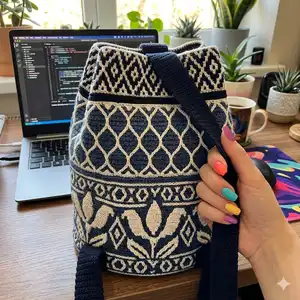
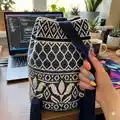
Create a beautifully detailed mosaic crochet backpack with the Lili Backpack pattern. This intermediate design combines overlay mosaic techniques, front-post stitches, and chart-reading to produce a structured, lined bag with straps and a reinforced upper edge. You will enjoy creating the intricate floral and geometric motifs while learning precise finishing and lining techniques to make a durable, everyday accessory.
Progress Tracker
0% Complete
— Before starting :
Infos :
Check pattern page for corrections and updates before starting: https://www.outstandingcrochet.com/lili-backpack-crochet-pattern. For pattern support join Outstanding Crochet and Friends Facebook group. To receive exclusive discounts, sign up for newsletters: www.OutstandingCrochet.com
— Gauge :
Info :
Single crochet stitch through back loop only: 30 sts x 30 rows = 10 x 10cm/ 4 x 4".
— Bag bottom :
Info :
Chart 1 on p. 5. Video for bottom Rounds 1, 2: https://youtu.be/XEP3AcIPy18. Special stitch: inc: increase, 2sc blo in same st.
Round 1 :
(RS): with A make 32sts of foundation cord, turn, ch1 (doesn't count as st throughout), 3sc in same st, 30sc, 3sc in last st, other side of fnd cord (work in same sts from other side): 30sc, ss in 1st sc. (66sc)
Round 2 :
(RS): ch1, *3inc, pm, 30sc, pm, rep from * except don't pm at the end of rnd, ss in 1st sc (later in the pattern: ss). (72sc)
Info :
Note: 30sc in the middle of both long sides are separated by markers from short sides with increases to help you count sts. Move markers up in every round.
Round 3 :
ch1, *[inc, sc]x3, 30sc, rep from *, ss. (78sc)
Round 4 :
ch1, *[2sc, inc]x3, 30sc, rep from *, ss. (84sc)
Round 5 :
ch1, *[inc, 3sc]x3, 30sc, rep from *, ss. (90sc)
Round 6 :
ch1, *3sc, [inc, 4sc]x2, inc, sc, 30sc, rep from *, ss. (96sc)
Round 7 :
ch1, *sc, [inc, 5sc]x2, inc, 4sc, 30sc, rep from *, ss. (102sc)
Round 8 :
ch1, *[6sc, inc]x3, 30sc, rep from *, ss. (108sc)
Round 9 :
ch1, *4sc, [inc, 7sc]x2, inc, 3sc, 30sc, rep from *, ss. (114sc)
Round 10 :
ch1, *[inc, 8sc]x3, 30sc, rep from *, ss. (120sc)
Round 11 :
ch1, *7sc, [inc, 9sc]x2, inc, 2sc, 30sc, rep from *, ss. (126sc)
Round 12 :
ch1, *3sc, [inc, 10sc]x2, inc, 7sc, 30sc, rep from *, ss. (132sc)
Round 13 :
ch1, *7sc, [inc, 11sc]x2, inc, 4sc, 30sc, rep from *, ss. (138sc)
Round 14 :
ch1, *[12sc, inc]x3, 30sc, rep from *, ss. (144sc)
Round 15 :
ch1, *5sc, [inc, 13sc]x2, inc, 8sc, 30sc, rep from *, ss. (150sc)
Round 16 :
ch1, *sc, [inc, 14sc]x2, inc, 13sc, 30sc, rep from *, ss. (156sc)
Round 17 :
ch1, *10sc, [inc, 15sc]x2, inc, 5sc, 30sc, rep from *, ss. (162sc)
Round 18 :
ch1, *4sc, [inc, 16sc]x2, inc, 12sc, 30sc, rep from *, ss. (168sc)
Round 19 :
ch1, *15sc, [inc, 17sc]x2, inc, 2sc, 30sc, rep from *, ss. (174sc)
Round 20 :
ch1, *10sc, [inc, 18sc]x2, inc, 8sc, 30sc, rep from *, ss. (180sc)
Round 21 :
ch1, *5sc, [inc, 19sc]x2, inc, 14sc, 30sc, rep from *, ss. (186sc)
Round 22 :
ch1, *15sc, [inc, 20sc]x2, inc, 5sc, 30sc, rep from *, ss. (192sc)
Round 23 :
ch1, *11sc, [inc, 21sc]x2, inc, 10sc, 30sc, rep from *, ss. (198sc)
Round 24 :
ch1, *[inc, 22sc]x3, 30sc, rep from *, ss. (204sc)
Info :
Fasten off. Wash and dry according to Care section on p. 12. Measure length (L=26cm/ 10 1/4") and width (W=16cm/ 6 1/4"). Trace bag bottom to a piece of paper and cut out a template for making lining.
— Rules for overlay mosaic crochet :
Infos :
Overlay mosaic crochet is worked on right side (RS) only. Each round is made with one color. Yarn1 and Yarn2 are alternated in each round. Switch to next color at the end of rnd: make joining ss in back loop of first stitch with next rnd color, tighten all loops. Sc (empty blocks on charts): made in stitches from prev round through back loop only. Abbreviation blo (back loop only) is skipped to simplify instructions. Dc, dc- increases and decreases: drop down stitches, made in stitches from corresponding color rnd (2nd rnd down) and through front loop only. Abbreviation flo (front loop only) is skipped to simplify instructions. 1st st of each mosaic rnd: sc is made in back loop of pr st, dc is made in front loop of st from corresponding color rnd (2nd rnd down). Last ss of each mosaic rnd is made with next rnd color in back loop of 1st st. Use invisible join technique for rounds that start and end with dc (Videos section).
— Bag body :
Info :
Charts 2, 3 on p. 7, 11. Step pictures for Rnds 13-43 on p. 13. Special stitches: FPdc, FPtr (front post stitches): made in directed stitches from 2nd rnd down / same color rnd. FPhdc: made in dc from prev rnd. Leg(s): parts of decreasing sts. For example, dc2tog has two dc-legs. /-dc, /-sc: right-slanted dc or sc. \-dc, \-sc: left-slanted dc or sc. Shorter bag: skip Rounds 67-82.
Round 1 :
with B ch1, 204sc, ss. Switch to upcoming color at the end of Rnd 3: make last ss with C.
Round 2 :
with B ch1, 204sc, ss.
Round 3 :
with B ch1, 204sc, ss. Switch to upcoming color at the end of Rnd 3: make last ss with C.
Round 4 :
with C ch1, 204sc, with B ss.
Round 5 :
with B ch1, 204sc, with C ss.
Round 7 :
with B *sc, 3dc, [3sc, dc]x6, 3sc, 3dc, rep from * x5, with C ss.
Round 8 :
with C *dc, 3sc, dc, sc, dc, [2sc, dc, 2sc, dc]x3, 3sc, rep from * x5, with B ss.
Round 9 :
with B *sc, 2dc, [2sc, dc, 2sc, dc, sc, dc]x3, 2sc, dc, 2sc, 2dc, rep from * x5, with C ss.
Round 10 :
with C *dc, 2sc, [3sc, dc]x7, 2sc, rep from * x5, with B ss.
Round 11 :
with B *sc, 2dc, [2sc, dc, 2sc, dc, sc, dc, dc]x3, 2sc, 2dc, rep from * x5, with C ss.
Round 12 :
with C *dc, 3sc, dc, sc, dc, [2sc, dc, 2sc, dc]x3, 3sc, rep from * x5, with B ss.
Info :
See chart key on p.11. Red column highlights first st of each round. Each round starts with ch1 (doesn't count as st, omitted on the chart). Start Rnd 28 with dc2inc, make dc3inc in the middle of each 5 rem flowers, finish rnd with dc in same st as beg dc2inc (tog counts as dc3inc). Start Rnd 42 with sc2tog, make sc3tog in the middle of each 5 rem flowers, finish rnd with partial sc: with 2lps on hook and with B make ss in beg sc2tog.
Round 13 :
with B *2sc, 2dc, [3sc, dc]x7, dc, sc, rep from * x5, with C ss.
Round 14 :
with C, *dc, dc2inc, sk dc, 29sc (1st in 2nd of 2dc, last in 1st of 2dc), sk dc, dc2inc, rep from * x5, with B ss.
Round 15 :
with B *sc, FPhdc, 4sc, 2dc, 19sc, 2dc, 4sc, FPhdc, rep from * x5, with C ss.
Round 16 :
with C *dc, sc, dc, sc, dc, dc2inc, sk dc, 21sc (1st in 2nd of 2dc, last in 1st of 2dc), sk dc, dc2inc, dc, sc, dc, sc, rep from * x5, with B ss.
Round 17 :
with B *sc, dc2inc (in FPhdc), sk dc, 2sc, tr (in sc below 2nd st back), 3sc (1st in 2nd dc of dc2inc), dc2tog (1st leg in sc below prev sc), 15dc, dc2tog, 3sc (1st above 2nd leg of prev st, last in 1st dc of dc2inc), tr (in sc below 3rd st forward), 2sc (1st in dc, 2nd in sc), sk dc, dc2inc (in FPhdc), rep from * x5, with C ss.
Info :
Rounds 18-20 video: https://youtu.be/wdkBpgrSB0w
Round 18 :
with C *dc, 2sc, dc2tog (1st leg in dc below prev st), dc, sc (in tr), 3dc (1st in 2nd dc of dc2inc), 17sc (1st and last in dc2tog), 3dc (last in 1st dc of dc2inc), sc (in tr), dc (in dc), dc2tog (2nd leg in dc), 2sc, rep from * x5, with B ss.
Round 19 :
with B *sc, 2dc, 4sc (1st in dc2tog), FPtr in tr, 2sc (1st in dc), dc2tog (1st leg in dc2tog or below prev st), 6dc, sc, 6dc, dc2tog (in next dc), 2sc, rep from * x5, with C ss.
Round 20 :
with C *dc, 4sc, dc2tog (1st leg in dc below prev sc), dc (in 1st of 3dc), sc (in FPtr), dc (in 3rd of 3dc), dc2inc (in next sc), sk dc2tog, 6sc (1st in next dc after dc2tog), dc, 6sc (last in dc before dc2tog), sk dc2tog, dc2inc (in sc below next sc after dc2tog), dc (in 1st of 3dc), sc (in FPtr), dc (in 3rd of 3dc), dc2tog (1st leg in sc, 2nd leg in dc), 4sc (1st in st above prev leg), rep from * x5, with B ss.
Round 21 :
with B *sc, 3dc, dc2inc, sk dc2tog, 3sc (2nd in sc above FPtr), FPtr (in FPtr), sc (in 2nd dc of dc2inc), 5dc, 3sc (2nd in dc), 5dc, sc (in 1st dc of dc2inc), FPtr (in FPtr), 3sc (2nd in sc above FPtr), sk dc2tog, dc2inc (in next sc), 3dc, rep from * x5, with C ss.
Round 22 :
with C *dc, 6sc, dc2tog (1st leg in dc below prev st, 2nd in sc), dc (in dc), sc (in FPtr), dc2inc (in 2nd dc of dc2inc), sk dc, 4sc, dc, sc, dc, 4sc, sk dc, dc2inc (in 1st dc of dc2inc), sc (in FPtr), dc (in dc), dc2tog (1st leg in sc, 2nd leg in dc), 6sc (1st in sc above prev leg), rep from * x5, with B ss.
Round 23 :
with B *2sc, 4dc, dc2inc (in sc after dc2inc), sk dc2tog, 4sc (2nd in sc above FPtr), 3dc, 2sc, dc, 2sc, 3dc, 4sc, rep from * x5, with C ss.
Round 24 :
with C *2dc, 7sc, dc2tog (1st leg in dc below prev st, 2nd leg in sc above FPtr), 2dc, 3sc, dc, 3sc, 2dc, dc2tog (1st leg in sc above FPtr), 7sc (1st in st above prev leg), dc, rep from * x5, with B ss.
Info :
Step pictures for Rnds 13-43 on p. 13.
Round 25 :
with B *4sc, 6\-dc (in 5dc and sc; 1st in dc below prev sc), sk dc2tog, 2sc, 2dc, 2sc, dc, sc, dc, 2sc, 2dc, 2sc, sk dc2tog, 6/\-dc (1st in sc after dc2tog, each in st below next st), 3sc (1st in st above st with prev dc), rep from * x5, with C ss.
Info :
Rounds 26-30 video: https://youtu.be/NBeaGw3sIaQ
Round 26 :
with C *3sc, dc2tog (1st leg in st below prev sc), 2FPhdc (in 1st and 2nd of 6 dc), 8sc, dc, 2sc, dc, 2sc, dc, 8sc, 2 FPhdc (in last 2dc of 6), dc2tog, 2sc (1st in st above st with prev leg), rep from * x5, with B ss.
Round 27 :
with B *sc, 2dc, 6sc (1st in dc2tog), dc2tog (1st leg in st below prev sc), 3dc, 2sc, dc, 3sc, dc, 2sc, 3dc, dc2tog, 6sc (1st in st above prev leg, 4th and 5th in FPhtdc, 6th in dc2tog), 2dc, rep from * x5, with C ss.
Round 28 :
with C dc2inc, *sk dc, 2sc (1st in dc, 2nd in sc), 6\-dc (1st in dc2tog below prev sc), sk dc2tog, 3sc, dc, 2sc, dc, sc, dc, 2sc, dc, 3sc, 6/\-dc (1st in sc after dc2og, 4th and 5th in FPhdc), 2sc (1st in sc above dc2tog with last dc), sk dc**, dc3inc in sc, rep from * x4, rep from * to **, dc in same st as beg dc2inc (tog count as dc3inc), with B ss.
Round 29 :
with B *2sc, dc, dc2inc, sk dc, 5sc, dc2tog (1st leg in dc2tog), 2dc, 2sc, dc, 3sc, dc, 2sc, dc2tog (2nd leg in dc2tog), 5sc, sk dc, dc2inc, dc, sc, rep from * x5, with C ss.
Round 30 :
with C *dc, dc2inc, sk dc, 2sc (in dc2inc), 4dc, dc2inc, sk dc2tog, 3sc, dc, 2sc, dc, 2sc, dc, 3sc, sk dc2tog, dc2inc (in next dc), 4dc, 2sc (in dc2inc), sk dc, dc2inc, rep from * x5, with B ss.
Info :
Rounds 31-43 video: https://youtu.be/tCixnwvveAI
Round 31 :
with B *3sc, 2dc, 6sc, 3dc (2 in dc, last in sc), 2sc, dc, sc, dc, 2sc, 3dc, 6sc, 2dc, 2sc, rep from * x5, with C ss.
Round 32 :
with C *2dc, dc2inc, 2\-sc (in 2dc), 6dc, sk dc, 3sc, dc, 3sc, dc, 3sc, sk dc, 6dc, 2\-sc (in 2dc), dc2inc, dc, rep from * x5, with B ss.
Round 33 :
with B *4sc, 2dc, 6sc, 3dc (2 in dc, last in sc), 2sc, dc, sc, dc, 2sc, 3dc, 6sc, 2dc, rep from * x5, with C ss.
Round 34 :
with C *4dc, 2sc, 6dc, 4sc, dc, sc, dc, 4sc, 6dc, 2sc, 3dc, rep from * x5, with B ss.
Round 35 :
with B *4sc, 2dc, 6sc, 4dc, 3sc, 4dc, 6sc, 2dc, 3sc, rep from * x5, with C ss.
Round 36 :
with C *4dc, 3sc, 6\-dc (1st in st below prev sc), sk dc, sc, FPhdc, 2sc, dc, 2sc, FPhdc, sc, sk dc, 6/-dc (in 6 dc), 3sc (1st in sc above st with prev dc), 3dc, rep from * x5, with B ss.
Round 37 :
with B *3sc, sk dc, dc, dc2inc, dc, dc2inc, sk dc, 7sc (last in FPhdc), 2dc, sc, 2dc, 7sc (1st in FPhdc), sk dc, dc2inc, dc, dc2inc, sk dc, 2sc, rep from * x5, with C ss.
Round 38 :
with C *2dc, dc2tog, 6sc (in 5dc, last in sc), dc2tog (1st leg in dc below prev sc), 3dc, dc2tog (2nd leg in FPhdc), 7sc (1st in sc above FPhdc), dc2tog (1st leg in FPhdc), 3dc, dc2tog, 6sc (1st in sc above dc with prev leg), dc, rep from * x5, with B ss.
Round 39 :
with B *2sc, sk dc2tog, dc2inc, 5dc (4 in dc, last in sc), 5sc (1st and last in dc2tog), 7dc, 5sc (1st and last in dc2tog), 5dc (1st in sc, 4 in dc), dc2inc, sk dc2tog, sc, rep from * x5, with C ss.
Round 40 :
with C *dc, dc2tog (2nd leg in dc2tog), 31sc, dc2tog (1st leg in dc2tog), rep from * x5, with B ss.
Round 41 :
with B *sc, sk dc2tog, dc2inc (in 1st dc of dc2inc), dc, 27sc, dc, dc2inc (in 2nd dc of dc2inc), sk dc2tog, rep from * x5, with C ss.
Info :
Note for Rnd 42: to compensate for the higher middle petal due increases, instead of dc3tog, sc3tog is made at the top of each petal.
Round 42 :
with C Sc2tog (2nd leg in dc2tog), [33sc, sc3tog (1st and 3rd legs in dc2tog)]x5, 33sc, sc in dc2tog, but do not finish: with 2 lps on hook, with B ss.
Round 43 :
with B *FPsc (in sc3tog), 3dc, [3sc, dc]x6, 3sc, 3dc, rep from * x5, with C ss.
Round 44 :
with C *4sc, [dc, sc, dc, 2sc, dc, 2sc]x3, dc, sc, dc, 3sc, rep from * x5, with B ss.
Round 45 :
with B *sc, 2dc, [2sc, dc, 2sc, dc, sc, dc, dc]x3, 2sc, dc, 2sc, 2dc, rep from * x5, with C ss.
Round 46 :
with C *dc, 2sc, [dc, 3sc]x7, dc, 2sc, rep from * x5, with B ss.
Round 47 :
with B *2sc, [dc, 2sc, dc, 2sc, dc, sc]x4, rep from * x5, with C ss.
Round 48 :
with C *sc, dc, 2sc, [dc, sc, dc, 2sc, dc, 2sc]x3, dc, sc, dc, 2sc, rep from * x5, with B ss.
Round 49 :
with B *dc, 2sc, [dc, 3sc]x7, dc, 2sc, rep from * x5, with C ss.
Info :
Note: Keep making all sc in back loop, all dc in front loop from 1 round down.
Round 50 :
with C 204sc, with B ss.
Round 51 :
with B 204sc, with C ss.
Round 52 :
rep Rnd 50. (204sc)
Dec Round 53 :
with B [49dc, dc2tog]x4, with C ss. (200 sts)
Round 54 :
with C 200sc (in each st), with B ss.
Round 55 :
with B 200sc (in each st), with C ss.
Info :
Rounds 56-57: https://youtu.be/MlfDDhfgco
Round 56 :
with C sc, \-dc (in sc below prev st, part of "dc, sc, dc" in same st), [sk sc, 2sc, dc2tog (sk 2sc after prev dc, 1st leg in next sc, sk sc, 2nd leg in next sc), 2sc (1st in st above 2nd leg), sk 2sc after prev dc*, (dc, sc, dc) in next sc, but middle sc in sc from prev rnd while both dc in sc from 2nd rnd down]x24, rep from [ to *, dc in same st as 1st dc, with B ss.
Round 57 :
with B [dc, sc, 2dc, FPsc (in dc2tog), 2dc, sc]x25, with C ss.
Round 58 :
with C [3sc, FPtr (in 2nd dc of "(dc, sc, dc) in sc"), sc (in FPsc), FPtr (in 1st dc of next "(dc, sc, dc) in sc"), 2sc]x25, with B ss.
Round 59 :
with B [3dc, sc (in FPtr), dc (in FPsc), sc (in FPtr), 2dc]x25, with C ss.
Round 60 :
with C [4sc, FPdc2tog (legs in FPtr), 3sc]x25, with B ss.
Round 61 :
with B [4dc, sc (in FPdc2tog), 3dc]x25, with C ss.
Round 62 :
with C [4sc, FPdc (in FPdc2tog), 3sc]x25, with B ss.
Round 63 :
with B [4dc, sc (in FPdc), 3dc]x25, with C ss.
Round 64 :
with C [3sc, FPdc (in FPdc), sc (in sc above same st), FPdc (in same FPdc), sk dc, 2sc]x25, with B ss.
Round 65 :
with B [3dc, sc (in 1st FPdc), dc bet 2 FPdc, sc (in 2nd FPdc), 2dc]x25, with C ss.
Round 66 :
with C [sc, FPtr (in 1st FPdc), 5sc, FPtr (in 2nd FPdc)]x25, with B ss.
Info :
For a shorter bag, skip Rounds 67-82.
Round 67 :
with B [dc, sc (in FPtr), 5dc, sc (in FPtr)]x25, with C ss.
Round 68 :
with C [FPdc2tog (legs in FPtr to left and right), 7sc]x25, with B ss.
Round 69 :
with B [sc (in FPdc2tog), 7dc]x25, with C ss.
Round 70 :
with C [FPdc (in FPdc2tog), 7sc]x25, with B ss.
Round 71 :
with B [sc (in FPdc), 7dc]x25, with C ss.
Round 72 :
with C sc, FPdc (in FPdc), [5sc, sk last dc (of 7)*, FPdc (in FPdc), sc (in sc above same st), FPdc in same FPdc]x24, rep from [ to *, FPdc in same st as 1st FPdc, with B ss.
Round 73 :
with B [dc (bet 2 FPdc), sc (in FPdc), 5dc, sc (in FPdc)]x25, with C ss.
Round 74 :
with C [3sc, FPtr (in FPdc), sc, FPtr (in next FPdc), 2sc]x25, with B ss.
Round 75 :
with B [3dc, sc (in FPtr), dc, sc (in FPtr), 2dc]x25, with C ss.
Round 76-82 :
rep Rnds 60-66.
Round 83 :
with B [dc, sc (in FPtr), 2dc, sc (in FPtr)]x25, with C ss.
Info :
Charts 3 Rounds 54-120 and notes for Chart 3 appear on p.11. Red column highlights first st of each round. Start Rnd 56 with \-dc, finish rnd with dc in same st as beg dc. Rnd 72 is similar to Rnd 52, but with FPdc instead of dc. Start Rnds 68 and 84 with FPdc2tog in 1 rnd down, finish with ss in beg dc2tog. For a shorter bag, skip Rounds 67-82.
Round 84 :
with C [FPdc2tog (legs in FPtr to the left and right), 2sc, sk dc, dc (in sc above same sc), dc (in same sc as 1st dc), sk dc, 2sc]x25, with A ss.
Round 85 :
with A 200sc (in every st), with C ss.
Round 86 :
with C 200sc (in every st), with A ss.
Round 87 :
with A 200dc (in every st), with C ss.
Round 90 :
with C [dc, 2sc, dc, sc, dc, 2sc]x25, with A ss.
Round 91 :
with A [2sc, dc, 3sc, dc, sc]x25, with C ss.
Round 92 :
with C [sc, dc, 2sc, dc, 2sc, dc]x25, with A ss.
Round 93 :
with A [dc, 2sc, dc, sc, dc, 2sc]x25, with C ss.
Round 94 :
with C [2sc, dc, 3sc, dc, sc]x25, with A ss.
Round 95 :
with A [sc, dc, 2sc, dc, 2sc, dc]x25, with C ss.
Round 96 :
with C [dc, 2sc, dc, sc, dc, 2sc]x25, with A ss.
Round 97 :
with A [2sc, dc, 3sc, dc, sc]x25, with C ss.
Round 98 :
with C [sc, dc, 2sc, dc, 2sc, dc]x25, with A ss.
Round 99 :
with A [2sc, dc, 3sc, dc, sc]x25, with C ss.
Round 100 :
with C [dc, 2sc, dc, sc, dc, 2sc]x25, with A ss.
Round 101 :
with A [sc, dc, 2sc, dc, 2sc, dc]x25, with C ss.
Round 102 :
with C [2sc, dc, 3sc, dc, sc]x25, with A ss.
Round 103 :
with A [dc, 2sc, dc, sc, dc, 2sc]x25, with C ss.
Round 104 :
with C [sc, dc, 2sc, dc, 2sc, dc]x25, with A ss.
Round 105 :
with A [2sc, dc, 3sc, dc, sc]x25, with C ss.
Round 106 :
with C [dc, 2sc, dc, sc, dc, 2sc]x25, with A ss.
Info :
Upper edge backing: Note: backing circumference should be less than of rem bag, hence 8 sts are decreased in next round.
Dec Round 107 :
with A [23sc blo, sc2tog blo]x8, ss. (192sc)
Round 108-120 :
with A 192sc blo, ss. Fasten off after Rnd 120. Wash and dry according to Care instructions.
— Care :
Info :
Hand-wash/ soak bag in lukewarm water with a bit of mild detergent, rinse, use a towel to squeeze out excess moisture, lay flat, leave to dry. Steam-block only 100% cotton projects if desired.
— Lining :
Info :
Soften bag by stretching it gently in all directions, imitating wear before measuring. 1) Measure straight part of the bag excluding bottom and upper edge backing: 34.5cm/ 13 5/8". Add 2cm/ 3/4" for adjustment and 1.5cm/ 1/2" for seam allowance: 38cm/ 15". 2) Measure bag width (35.12cm/ 13 7/8"), multiply x2 (70.24cm/ 27 3/4"), add 3cm/ 1 1/4" for seam allowance (73.24cm/ 28 7/8"). Cut a rectangle 73.24cm x 38cm/ 28 7/8" x 15". 3) Cut bottom using previously made template, adding 1.5cm/ 1/2" around for seam allowance. Baste side seam with 1.5cm/ 1/2" seam allowance. 4) Fold piece in half, placing seam in the middle of one side. Insert lining into the bag, check if it fits in perfectly. Make adjustments if needed. Make side seam. Overcast side seam edges separately, press open.
— Lining (continued) :
Info :
5) Fold bottom in half both ways and mark folds. 6) You marked 4 equal parts. 7) Fold lining at the side seam, mark fold on other side. Align side seam and marker, mark folds on both sides. You marked 4 equal parts. 8) Place lining and bottom right sides together. Align side seam with middle mark of the bottom long side, pin and baste parts together. 9) Stitch pieces together with 1.5cm/ 1/2" seam allowance. 10) Overcast edges together, fold towards the bag bottom and hand-stitch allowances to the bag bottom with whip-stitch. 11) Insert lining into the bag, fill bag to 1/3 with knitwear, stretch gently, shake bag while holding it by the upper edge allowing lining to fill the bag bottom entirely. Check that the height of the lining matches the height of the bag (without backing). 12) Make adjustments to the lining by trimming off excess fabric from its upper edge. If the end of the side seam comes undone after trimming, secure it with a few stitches. Overcast upper edge. Hand-stitch side seam allowances to the lining. Put aside.
— Strap loop :
Round 13 :
Facing RS of the bag back side, skip 1 rhombus to the right from rounds beg point, join A in an upper edge (starting point), ch16 (shouldn't arch after joining; make less sts if necessary).
Round 14 :
Turn, skip 1 rhombus to the left from rounds beg point, ss in upper edge (finishing point), turn, ch16, ss in starting point, turn, ch16, ss in finishing point, turn, ch16, ss in starting point (4x ch-16sps), tighten loop, turn.
Round 15 :
Make approximately 22sc or amount to cover the loop entirely. Make sc in all four ch-16sps at the same time, placing sc close to each other. Fasten off. Draw both tails to WS, secure and weave in.
— Straps :
Info :
Note: 150cm/ 59" long strap is folded in half to create two straps: each 75cm/ 29 1/2". Folded end is stitched to the backpack top, 2 other ends are stitched to the backpack back side close to the bottom. 150cm/ 59" length fits size S. To find a comfortable length, measure straps of an existing backpack, add 6cm/ 6 1/4" to the length because 3cm/ 1 1/4" at each end will be used to stitch them on.
Row 1 :
leave 50cm/ 20" tail, make 10 sts of foundation cord, turn, ch1, sc in each foundation st, turn.
Rows 2-367 :
or to 75cm/ 29 1/2" or to desired length, measured while strap is folded in half and stretched to a full capacity: ch1, 9sc (each made in upside-down "V"), sk 2lps after last upside-down V, sc in spot after 2lps, turn. Fasten off, leaving 50cm/ 20" tail.
Round 16 :
Fold strap in half. With a piece of A, sew folded edge to the bag front side upper edge at middle point (determine by drawing imaginary line up from middle flower). Make 4sts in each spot for secure connection.
Round 17 :
Insert straps into the loop.
— Finish lining :
Info :
18) Align end of each strap with Rnd 6 (flower starting round) and its middle with flower middle line. Facing bag RS, stitch strap to the bag around the perimeter of "strap width" x 3cm/ 1 1/4" rectangle and along 2 diagonals, making short back stitches on RS and longer sts on WS. Make 2 or 3 rounds for secure connection. Pay most attention to the durability of upper horizontal seam which will receive the most pressure. 19) Consider to reinforce upper horizontal seam with polyester thread. 20) Weave in all rem ends. Insert lining into the bag. Align and pin together middle mark of lining front side with the bag front side middle point (determine by drawing imaginary line up from middle flower). Align and pin together lining side seam with beginning of Rnd 106.
Info :
Prevent straps from pulling the bag upper edge up: before starting upper edge seam, unfold backing where straps are attached and stitch straps attaching seam (visible on WS between backing and rem bag) to lining upper edge with whip stitch if desired.
This Lili Backpack pattern combines mosaic crochet and careful finishing to create a sturdy, stylish bag you can be proud of. Follow the charts and step photos for the floral rounds, and use the lining instructions for a polished interior. The result is a beautiful, wearable piece with handmade charm. 🧶✨