🧢 Beautiful ✨ Detailed πŸ’ Adorable

EZ Diamond Lattice Blanket Pattern

EZ Diamond Lattice Blanket Pattern
4.0β˜… Rating
12-15 Hours Time Needed
1.7K Made This
βœ‚οΈ

Advanced Level

Designed for experienced crocheters, these patterns involve intricate designs and complex techniques to challenge and inspire.

⏱️

Multi-Day Project

A rewarding 12+ hour journeyβ€”perfect for dedicated crafters who love detailed work.

πŸ€—

Soft Hug

Gentle, plush, and full of warmth, creating a sense of comfort and coziness wherever they find a home.

About This EZ Diamond Lattice Blanket Pattern

This pattern creates a luxurious EZ Diamond Lattice blanket worked with Bernat Alize Blanket-EZ yarn to produce a raised, interlaced diamond texture. The technique uses a foundation of loops and a series of crossing loop rows to build the lattice surface. It is an ideal cozy throw for your home and makes a thoughtful handmade gift.
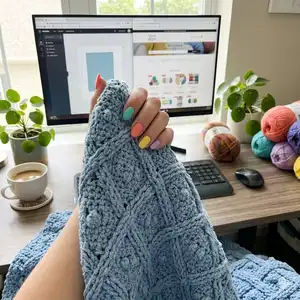
EZ Diamond Lattice Blanket Pattern crochet pattern - detailed view of completed project

The pattern includes row-by-row instructions, repeat guidance, and a bind off method to finish the loops neatly. A video tutorial is referenced to help you master the special loop and cross stitches.

Why You'll Love This EZ Diamond Lattice Blanket Pattern

I absolutely love this pattern because the diamond lattice texture looks like an intricate cable but is achieved with a simple loop-and-cross technique. I get excited watching the pattern emerge row by row into a thick, cozy throw that invites snuggling. The chunky Blanket-EZ yarn makes the blanket work up quickly while remaining wonderfully soft and drapey. I also appreciate that the repeat structure lets me relax into a rhythm once I know the sequence, making it a satisfying mix of technique and meditative stitching.

EZ Diamond Lattice Blanket Pattern step 1 - construction progress EZ Diamond Lattice Blanket Pattern step 2 - assembly progress EZ Diamond Lattice Blanket Pattern step 3 - details and accessories EZ Diamond Lattice Blanket Pattern step 4 - final assembly and finishing

Switch Things Up

I love customizing blankets by changing colors; try a gradient or alternating stripe every few repeats to create a unique look.

I sometimes make the blanket wider by adding extra foundation loops in multiples that fit the lattice repeat for a larger throw or bedspread.

I also experiment with different yarns: a bulky or super bulky yarn will make a thicker, faster-to-finish blanket while a lighter bulky gives a drapier result.

I add a simple single crochet or reverse single crochet border to frame the lattice and hide any irregularities on the edges.

For a playful finish, I like to add tassels or fringe to the short ends of the blanketβ€”just be sure to secure them well to withstand washing and use.

If you want a more modern look, change the color of every repeat section so the diamonds read as blocks of color rather than texture alone.

I sometimes make a baby version by using fewer foundation loops and stopping the repeats earlier, adjusting the size to a baby-friendly dimension.

For an heirloom piece, I prefer to alternate two neutral shades and add a delicate scalloped edge to complement the chunky lattice.

I recommend testing a small swatch to see how the loop technique looks with your chosen yarn before committing to the full blanket.

If you feel adventurous, add small crochet applique9s or embroidered accents atop select diamonds to personalize the design even more.

Common Mistakes & How to Fix Them

βœ— Not counting 68 loops accurately for the foundation row leads to uneven edges; recount your loops carefully before beginning and adjust to ensure you have exactly 68 loops. βœ— Turning the work after rows when instructed not to will disrupt the lattice pattern; follow the instruction 'Do not turn' and work in the directions specified for each row. βœ— Holding the working yarn incorrectly will make pulling loops difficult and inconsistent; keep the working yarn behind the stitches as instructed and maintain even tension while pulling loops. βœ— Forgetting to repeat the correct row sequence causes the diamond pattern to become misaligned; mark the start of each repeat and check your work every few repeats to ensure alignment.
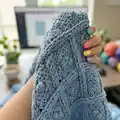
EZ Diamond Lattice Blanket Pattern

Create a plush, textural diamond lattice blanket using Bernat Alize Blanket-EZ yarn. This experienced-level pattern guides you through the unique loop-and-cross technique that produces a cozy, cable-like lattice. You'll love how the chunky yarn and repeating rows create a dramatic, soft throw perfect for living rooms or gifting. Follow the detailed instructions and video tutorial for best results.

Advanced 12-15 Hours

Materials Needed for EZ Diamond Lattice Blanket Pattern

β€” Main Fabric

  • 01
    Bernat Alize Blanket-EZ (6.4 oz / 180 g; 18 yds / 16 m) Country Blue (37018) - 7 balls

β€” Tools Required

  • 01
    Tapestry needle for weaving in ends
  • 02
    Scissors
  • 03
    Stitch markers (optional to mark repeats)
  • 04
    Measuring tape to check blanket dimensions
  • 05
    Video tutorial referenced for loop technique

Progress Tracker

0% Complete

β€” Blanket :

Measurements :

Approximately 56" [142 cm] wide x 60" [152.5 cm] long.

Infos :

Notes: Right side of project is facing at all times. 'Working yarn' is held behind stitches throughout work.

Info :

Count 68 loops for foundation row.

Round 1 :

Working from right to left, pull the 69th loop (from 'working yarn') up through 68th loop (last loop of foundation row) from behind to create a knit stitch. Pull next loop from working yarn up through next loop of foundation row. *Cross second loop of foundation row in front of first loop of foundation row (to the right). Pull next loop from working yarn up from behind next loop. Pull next loop from working yarn up from behind next loop. Cross next loop of foundation row in front of 2nd loop of foundation row (to the left). Pull next loop from working yarn up from behind 1st loop. (Pull next loop from working yarn up from behind next loop) twice. Repeat from * to end of row. Do not turn work. 68 stitches in row.

Round 2 :

Working from left to right, pull next loop from working yarn up from behind through last stitch worked on previous row. *Cross 2nd stitch over next stitch (to the left). Pull loop from working yarn up from behind 2nd stitch. Pull next loop from working yarn up from behind 1st stitch. (Pull next loop from working yarn up from behind next loop) twice. Cross next stitch in front of 2nd stitch (to the right). Pull next loop from working yarn up from behind 1st stitch. Pull next loop from working yarn up from behind 2nd stitch. Pull next loop from working yarn up from behind last stitch worked on previous row. Rep from * to last stitch. Pull loop from working yarn up from behind next loop. Do not turn.

Round 3 :

Working from right to left, cross 2nd stitch of previous row over 1st stitch (to the right). Pull loop from working yarn up from behind 2nd stitch. Pull next loop from working yarn up from behind 1st stitch. *(Pull next loop from working yarn up from behind next loop) over next 4 stitches. Cross 2nd stitch in front of next stitch (to the right). Pull next loop from working yarn up from behind 2nd stitch. Pull next loop from working yarn up from behind 1st stitch. Rep from * to last 6 stitches. *(Pull next loop from working yarn up from behind next loop) over next 4 stitches. Cross next stitch in front of 2nd stitch (to the left). Pull next loop from working yarn up from behind 2nd loop. Pull next loop from working yarn up from behind 1st loop. (Pull next loop from working yarn up from behind next loop) twice. Cross 2nd stitch in front of 1st stitch (to the left). Pull next loop from working yarn up from behind 2nd stitch. Pull next loop from working yarn up from behind 1st stitch. Pull next loop from working yarn up from behind last stitch. Do not turn.

Round 4 :

Working from left to right, pull next loop from working yarn up from behind through last stitch worked on previous row. *Cross next stitch in front of 2nd stitch (to the right). Pull next loop from working yarn up from behind 2nd loop. Pull next loop from working yarn up from behind 1st loop. (Pull next loop from working yarn up from behind next loop) twice. Rep from * to end of row. Do not turn.

Round 5 :

Working from right to left, (pull next loop from working yarn up from behind last stitch worked on previous row) twice. *Cross next stitch in front of 2nd stitch (to the left). Pull next loop from working yarn up from behind 2nd stitch. Pull next loop from working yarn up from behind 1st stitch. Pull next loop from working yarn up from behind 1st stitch. (Pull next loop from working yarn up from behind next loop) twice. Rep from * to last 5 stitches. Cross 2nd stitch in front of 1st stitch (to the left). Pull next loop from working yarn up from behind 2nd stitch. Pull next loop from working yarn up from behind 1st stitch. Pull next loop from working yarn up from behind last stitch. Do not turn.

Round 6 :

Working from left to right, (pull next loop from working yarn up from behind last stitch worked on previous row) twice. *Cross next stitch in front of 2nd stitch (to the right). Pull next loop from working yarn up from behind 2nd stitch. Pull next loop from working yarn up from behind 1st stitch. (Pull next loop from working yarn up from behind next loop) twice. Rep from * to end of row. Do not turn.

Round 7 :

Working from right to left, (pull next loop from working yarn up from behind last stitch worked on previous row) twice. *Cross 2nd stitch in front of next stitch (to the right). Pull next loop from working yarn up from behind 2nd stitch. Pull next loop from working yarn up from behind 1st stitch. Pull next loop from working yarn up from behind last stitch worked on previous row three times. Rep from * to last 5 stitches. Cross 2nd stitch in front of 1st stitch (to the left). Pull next loop from working yarn up from behind 2nd stitch. Pull next loop from working yarn up from behind 1st stitch. Pull next loop from working yarn up from behind last stitch. Do not turn.

Round 8 :

Working from left to right, pull next loop from working yarn up from behind through last stitch worked on previous row. *Cross 2nd stitch in front of next stitch (to the left). Pull next loop from working yarn up from behind 2nd stitch. Pull next loop from working yarn up from behind 1st stitch. (Pull next loop from working yarn up from behind next loop) twice. Cross next stitch in front of 2nd stitch (to the right). Pull next loop from working yarn up from behind 1st stitch. Pull next loop from working yarn up from behind 2nd stitch. Pull next loop from working yarn up from behind last stitch worked on previous row. Rep from * to last stitch. Pull loop from working yarn up from behind next loop. Do not turn.

Round 9 :

Working from right to left, cross 1st stitch over 2nd stitch (to the left). Pull next loop from working yarn up from behind 2nd loop. *Pull next loop from working yarn up from behind 1st loop. (Pull next loop from working yarn up from behind next loop) over next 4 stitches. Cross 2nd stitch in front of next stitch (to the right). Pull next loop from working yarn up from behind 2nd stitch. Pull next loop from working yarn up from behind 1st stitch. Rep from * to last stitches. Do not turn.

Round 10 :

Working from left to right, pull next loop from working yarn up from behind last stitch worked on previous row. Cross next stitch in front of 2nd stitch (to the right). Pull next loop from working yarn up from behind 2nd stitch. Pull next loop from working yarn up from behind 1st stitch. Pull next loop from working yarn up from behind last stitch worked on previous row twice. *Cross 2nd stitch over next stitch (to the left). Pull next loop from working yarn up from behind 2nd stitch. Pull next loop from working yarn up from behind 1st stitch. Rep from * to last stitch. Do not turn.

Info :

Repeat 5th to 10th rows for pattern. Work in pattern until Blanket measures approximately 60" [152.5 cm], ending on a 5th row.

Bind off row :

Working in same direction as last row, pull 2nd stitch through 1st stitch. Pull 3rd stitch through 2nd stitch. Pull 4th stitch through 3rd stitch. Continue in this manner to end of row. Cut thread at base of loop (thread used to create the loop) to create a yarn 'tail'. Tie to secure and weave in end.

Assembly Instructions

  • Work pattern repeats until blanket measures approximately 60" [152.5 cm], ending on a 5th row as specified in the instructions.
  • Bind off by pulling subsequent stitches through the previous stitch across the row, then cut the thread at the base of the final loop and tie to secure.
  • Weave in the yarn 'tail' and all loose ends with a tapestry needle to secure the loops and prevent unraveling.
  • Block or gently shape the blanket if desired and trim any stray fibers to neaten edges.

Important Notes

  • πŸ’‘Right side of project is facing at all times while working the pattern rows.
  • πŸ’‘'Working yarn' is held behind stitches throughout work to allow smooth pulling of loops.
  • πŸ’‘Do not turn work at the end of rows when the instructions specify 'Do not turn' to maintain the lattice orientation.
  • πŸ’‘Count 68 loops for the foundation row to ensure correct stitch count and consistent pattern repeats.

This EZ Diamond Lattice Blanket pattern delivers a gorgeous textured throw that feels like a warm hug every time you wrap up in it. The chunky Bernat Alize Blanket-EZ yarn and repeating lattice rows make for a stunning statement piece that dresses any sofa or bed. Make one in your favorite color for cozy nights in or as an extra-special handmade gift. 🧢✨😊

You ask,

we answer.

FAQs

What size will the finished piece be?

The finished blanket measures approximately 56" [142 cm] wide by 60" [152.5 cm] long when using the recommended yarn and following the pattern exactly.

Can I change the size of the blanket?

Yes, you can adjust the width by changing the number of foundation loops in multiples that fit the repeat, and adjust the length by repeating the 5th to 10th row sequence until you reach your desired measurement.

Do I need to turn my work between rows?

No. The pattern frequently instructs 'Do not turn'β€”work each row in the direction specified to maintain the correct lattice orientation.

Is there a tutorial to show the loop and cross technique?

Yes, a video tutorial is referenced on the pattern page to help you learn and practice the special loop and crossing technique used in this design.