🧢 Beautiful ✨ Detailed πŸ’ Adorable

Embla's Mom Pattern

Embla's Mom Pattern
4.4β˜… Rating
12-15 Hours Time Needed
1.9K Made This
βœ‚οΈ

Intermediate Level

Ideal for those with basic crochet experience, featuring slightly more advanced stitches and techniques to expand your skills.

⏱️

Multi-Day Project

A rewarding 12+ hour journeyβ€”perfect for dedicated crafters who love detailed work.

πŸ‘•

Casual Chic

Relaxed style with a modern twist, perfect for everyday wear while maintaining that handcrafted uniqueness.

About This Embla's Mom Pattern

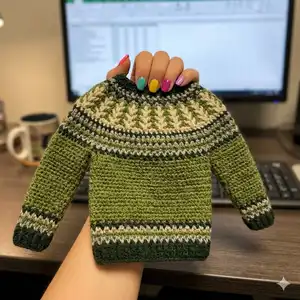
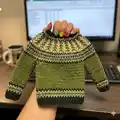
This pattern is a top-down knitted sweater featuring a forest colorwork yoke and comfortable, everyday shaping. It includes multiple sizes and clear charts to guide the yoke and finishing details. The back shaping option creates a more feminine silhouette while preserving traditional wool sweater characteristics.

Embla's Mom Pattern crochet pattern - detailed view of completed project

Worked in DK or sport weight yarn with a stranded colorwork chart, the sweater is seamless and knitted in the round. Detailed needle suggestions, yarn requirements and finishing charts are included for accurate results.

Why You'll Love This Embla's Mom Pattern

I absolutely love this pattern because the forest-inspired yoke adds striking visual interest while remaining practical for everyday wear. I enjoy the top-down construction which makes fitting and length adjustments easy as you knit. The optional waist shaping is a thoughtful touch that lets me create a flattering silhouette without complicated seaming. Working the colorwork in the round is relaxing and satisfying, and I always enjoy seeing the yoke come alive row by row.

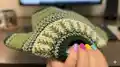
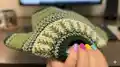
Embla's Mom Pattern step 1 - construction progress Embla's Mom Pattern step 2 - assembly progress Embla's Mom Pattern step 3 - details and accessories Embla's Mom Pattern step 4 - final assembly and finishing

Switch Things Up

I love adjusting the color palette to create a completely different look; try soft pastels for a gentle, modern take or high-contrast colors for a classic nordic feel.

To make a chunkier version I switch to a thicker yarn and larger needles which creates a cozy, oversized sweater perfect for colder climates.

If I want a lighter, more delicate sweater I use fingering or sport weight yarn with smaller needles and knit the same chart for a slimmer result.

I often lengthen the body or sleeves by adding extra stockinette rows before the Finishing Chart to customize the fit for my height.

For a different neckline style try a deeper V by working decreases at the front or add a small shawl collar by picking up stitches and working a short collar after the yoke.

I sometimes substitute hand-dyed or speckled yarn for Color A to give the solid section a subtle, artisanal texture that complements the charted yoke.

To make the sweater more fitted I increase waist shaping frequency or knit a smaller size and adjust length, checking measurements as I go.

Want cuffs in a contrasting color? Work the Finishing Chart in a different duo of colors to create visual interest at hems and cuffs.

I also like to experiment with stranded techniques like carrying two colors differently or using a slipped-stitch variant to change fabric elasticity and drape.

For gifting I knit a matching child size by adjusting needle size and yarn weight, or create coordinating accessories like a hat or mittens using the same yoke motifs.

Common Mistakes & How to Fix Them

βœ— Casting on too tightly will make the neck edge tight and uncomfortable; cast on loosely using a larger needle or a long-tail variation and check the neck circumference before joining. βœ— Forgetting to place the BOR marker when joining in the round causes confusion in counts and shaping; place a stitch marker at the beginning of the round immediately after joining and keep it visible. βœ— Not checking gauge in stranded colorwork will change the fit significantly; knit a colorwork swatch in the round with the recommended needles and block it before measuring to match the gauge. βœ— Skipping stitch holders or misplacing sleeve stitches leads to mismatched sleeve counts; transfer exact stitch numbers to holders and label them or use scrap yarn to avoid mistakes. βœ— Pulling floats too tight in colorwork can pucker the fabric and restrict stretch; maintain loose, even tension across floats and catch floats occasionally to prevent snagging.

Embla's Mom Pattern

Create a warm, top-down sweater with a beautiful forest-inspired colorwork yoke. This pattern guides you through a shaped back for a flattering fit while maintaining classic wool sweater features. Perfect for knitters who love stranded colorwork and seamless construction. Make a cozy heirloom piece with clear instructions and charts.

Intermediate 12-15 Hours

Materials Needed for Embla's Mom Pattern

β€” Main Fabric

  • 01
    DK or sport weight yarn in Color A, approx. 650 (700) 750 (800) 900 (950) 1000 meters / 711 (766) 820 (875) 984 (1039) 1094 yards
  • 02
    DK or sport weight yarn in Color B, approx. 170 (200) 230 (260) 290 (320) 350 meters / 186 (219) 252 (284) 317 (350) 383 yards
  • 03
    DK or sport weight yarn in Color C, approx. 125 (150) 175 (200) 240 (280) 320 meters / 137 (164) 192 (219) 263 (306) 350 yards

β€” Tools Required

  • 01
    3 mm / US 2.5 circular needles (40 cm / 16 inches) and DPNs
  • 02
    3.5 mm / US 4 circular needles (40, 60, 80 cm / 16, 24, 32 inches) and DPNs
  • 03
    Stitch markers
  • 04
    Stitch holders or scrap yarn to hold sleeve stitches
  • 05
    Tapestry/yarn needle for weaving ends and sewing gaps
  • 06
    Scissors
  • 07
    Measuring tape
  • 08
    Waste yarn for provisional cast-on or to mark BOR
  • 09
    Blocking tools (pins, mat) recommended

Progress Tracker

0% Complete

β€” Neck :

Info :

With 3 mm / US 2.5 ndl, cast on 92 (100) 108 (116) 124 (132) 140 sts loosely using Color B. Join to knit in the rnd and PM at the BOR.

Round Next :

[K2, p2] to end.

Info :

Repeat the previous rnd until work measures approx 3 cm / 1.25 inches.

β€” Yoke :

Info :

Switch to 3.5 mm / US 4 ndl.

Round Next :

K to end.

Info :

Begin working from Main Chart and inc as instructed.

Info :

From row 30 of Main Chart and onwards you should have a total of 276 (300) 324 (348) 372 (396) 420 sts on your ndl.

Info :

Continue working from Main Chart until the yoke measures approx. 20 (20) 21 (22) 23 (24) 25 cm / 7.75 (7.75) 8.25 (8.75) 9 (9.5) 9.75 inches or until the yoke reaches the desired depth.

β€” Dividing for Body and Sleeves :

Round Next :

Transfer 60 (64) 68 (72) 76 (80) 84 sts onto a stitch holder, CO 4 sts, place BOR M, CO 4 sts, k78 (86) 94 (102) 110 (118) 126 sts and then transfer 60 (64) 68 (72) 76 (80) 84 sts onto another stitch holder, CO 4 sts, PM, CO 4 sts, k to end of rnd.

Info :

You should now have a total of 172 (188) 204 (220) 236 (252) 268 sts on your ndl for the body of the garment.

Info :

The pattern continues on the next page.

β€” Body :

Info :

Begin working the body in the rnd. If Main Chart has not been completed, finish it. Switch to using only Color A upon completion of Main Chart.

β€” Waist Shaping (Optional) :

Info :

All shaping is done only to the Back of the garment. The Back refers to the first half of sts counting from the BOR marker. Shaping the garment is completely optional, and can be skipped. For a clear hourglass figure, dec and inc more frequently.

Info :

Work the following Dec Rnd every 3 cm / 1.25 inches, for a total of 6 (6) 5 (6) 6 (6) 6 times.

Round Dec :

Dec Rnd: K1, k2tog, k to 3 sts before next M, ssk, k to end. - 2 sts dec'd

Info :

You should have 160 (176) 194 (208) 224 (240) 256 sts on your ndl.

Info :

Finish decreasing when the body measures approx. 20 (21) 21 (22) 22 (23) 23 cm / 7.75 (8.25) 8.25 (8.75) 8.75 (9) 9 inches from the underarm or when the garment reaches the narrowest part of your waist.

Info :

It is now time to inc towards the hips of the garment. Work the following Inc Rnd every 2 (2) 2 (2) 1.5 (1.5) 1.5 cm / 0.75 (0.75) 0.75 (0.75) 0.5 (0.5) 0.5 inches, for a total of 7 (7) 7 (9) 9 (9) 9 times.

Round Inc :

Inc Rnd: K1, m1L, k to 1 st before next M, m1R, k to end.

Info :

You should now have a total of 174 (190) 208 (226) 242 (258) 274 sts on your ndl.

Info :

When your work measures 34 (35) 35 (36) 36 (37) 37 cm / 13.5 (13.75) 13.75 (14.25) 14.25 (14.5) 14.5 inches from the underarm, or when the garment is approx. 9 cm / 3.5 inches shorter than your preferred length. Begin working from Finishing Chart.

Info :

After completing Finishing Chart, switch to 3 mm / US 2.5 ndl and work 2x2 rib, ie., k2, p2, in the rnd in Color B until the ribbing measures 5 cm / 2 inches.

Info :

Bind off all sts in pattern.

β€” Finishing Chart :

Info :

Work Finishing Chart as charted for the body hem and cuffs. The pattern continues on the next page.

β€” Sleeves :

Info :

Join yarns needed for the remainder of Main Chart or Color A if Main Chart is already completed.

Round Next :

Starting in the middle of one of the underarm COs, pick up (do not knit) 4 sts from the underarm CO, pick up an extra st where the underarm CO sts meet the on-hold sts to avoid holes, transfer the 60 (64) 68 (72) 76 (80) 84 sleeve sts that were put on hold back onto your ndl, pick up an extra st to avoid holes, pick up 4 sts along the underarm CO. PM to mark BOR.

Info :

You should now have a total of 70 (74) 78 (82) 86 (90) 94 sts on your ndl.

Info :

Work in stockinette st in the rnd and complete Main Chart if necessary.

Info :

Work the following Dec Rnd every 2 cm / 0.75 inches as you progress, a total of 13 (13) 15 (15) 17 (17) 19 times.

Round Dec :

Dec Rnd: K2tog, k to 2 sts before end, ssk. - 2 sts dec'd

Info :

You should now have a total of 44 (48) 48 (52) 52 (56) 56 sts on your ndl.

Info :

Continue working in stockinette st until the sleeve measures approx 37 (38) 38 (39) 39 (40) 41 cm / 14.5 (15) 15 (15.25) 15.25 (15.75) 16.25 inches from the underarm or when the sleeve is approx 9 cm / 3.5 inches shorter than your preferred length.

Info :

Start working Finishing Chart.

Info :

Upon completion of Finishing Chart, switch to 3 mm / US 2.5 ndl and work 2x2 rib, ie., k2, p2, in the rnd in Color B until the ribbing measures 5 cm / 2 inches or to your preferred length.

Info :

Bind off all sts in pattern. Make the second sleeve in the same manner.

Info :

Weave in all ends and sew any gaps around the underarm shut if necessary.

Assembly Instructions

  • Transfer sleeve sts from holders and pick up the underarm CO sts as instructed, arranging sleeve stitches evenly before marking the BOR to ensure correct sleeve placement.
  • After completing both sleeves, bind off all sts in pattern and use a tapestry needle to weave in ends securely on the wrong side.
  • Block the sweater gently to even out colorwork and relax the fabric, pinning to measurements to achieve the correct finished dimensions.
  • Sew any gaps around the underarm seam using mattress stitch or a tidy whipstitch to close holes where underarm COs were made.
  • Check symmetry of the yoke and body before final finishing and adjust any floats or loose stitches, securing floats where necessary to prevent snagging.

Important Notes

  • πŸ’‘Use stitch markers to mark the BOR and any shaping markers to keep track of rounds and increases or decreases.
  • πŸ’‘Cast on loosely for the neck to avoid a tight neckline; a tight CO will make joining and wearing uncomfortable.
  • πŸ’‘Maintain even tension while stranded knitting; do not pull floats too tightly across the back to prevent puckering.
  • πŸ’‘Use stitch holders or scrap yarn to securely hold sleeve stitches; label holders to avoid mix-ups between left and right sleeves.

This sweater is a love letter to classic Nordic yoke knits, updated with a shaped back for a flattering fit and a modern silhouette. Make it in forest greens for a cozy rustic feel or choose bold contrasts to make the yoke pop. Whether you gift it or keep it, this top-down pullover will become a go-to in chilly weather. 🧢✨

You ask,

we answer.

FAQs

What size will the finished piece be?

Garment chest circumferences are provided for multiple sizes: Approx. 78 (85) 93 (100) 107 (114) 121 cm / 30.75 (33.5) 36.5 (39.25) 42.25 (45) 47.75 inches depending on the selected size in the pattern.

Can I use different yarn weights for this pattern?

You can substitute yarn weights but this will change the finished size; adjust needle sizes accordingly and always knit a tension swatch in colorwork to match the stated gauge of 22 sts = 10 cm / 4 inches.

Do I need prior colorwork experience for this pattern?

The pattern is intermediate level and assumes you are comfortable with stranded colorwork in the round, maintaining floats and reading a chart.

How long does this project typically take to complete?

Most knitters will spend about 12-15 hours on this sweater depending on experience, chart complexity, and size selected; allow extra time for blocking and finishing.

What needles do I need for this pattern?

You will need 3 mm / US 2.5 and 3.5 mm / US 4 circular needles in various lengths (40, 60, 80 cm) and DPNs or circulars for small circumferences, as suggested in the pattern.