🧢 Beautiful ✨ Detailed πŸ’ Adorable

Pig Amigurumi Pattern

Pig Amigurumi Pattern
4.1β˜… Rating
5-7 Hours Time Needed
4.1K Made This
βœ‚οΈ

Intermediate Level

Ideal for those with basic crochet experience, featuring slightly more advanced stitches and techniques to expand your skills.

⏱️

Weekend Treat

Takes 5-7 hours, making it an enjoyable project to finish over a couple of days.

🧸

Cute Companion

An adorable friend to cherish, handcrafted with love to bring comfort and joy for years to come.

About This Pig Amigurumi Pattern

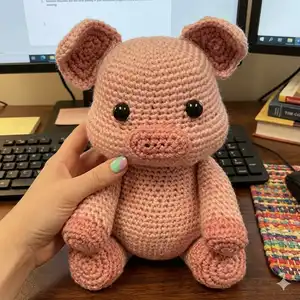
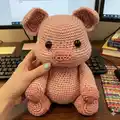
This pattern creates a soft, poseable pig amigurumi worked mostly in single crochet with shaping for a rounded head and body. It includes separate pieces for ears, nose, arms, legs and a curly tail, plus detailed assembly notes. The design uses two shades of pink for contrast and simple techniques to create a folded ear and snout detail.

Pig Amigurumi Pattern crochet pattern - detailed view of completed project

Clear row-by-row instructions and photos are provided to help you place eyes and sew pieces neatly. I recommend lightweight cotton yarn (weight 3) and a 2.25mm hook for similar size and texture.

Why You'll Love This Pig Amigurumi Pattern

I absolutely love this pattern because it balances simple construction with charming details like the layered ears and tiny snout that really bring the pig to life. I enjoy how the color change technique creates natural shading on the limbs and ears without complicated stitches. Making each piece separately lets me perfect the stuffing and shaping, which makes assembly rewarding and the finished toy feel sturdy. I hope you find it as satisfying to stitch and assemble as I do β€” each pig becomes a little handmade treasure.

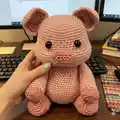
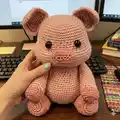
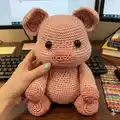
Pig Amigurumi Pattern step 1 - construction progress Pig Amigurumi Pattern step 2 - assembly progress Pig Amigurumi Pattern step 3 - details and accessories Pig Amigurumi Pattern step 4 - final assembly and finishing

Switch Things Up

I love customizing this pig by changing yarn colors; try neutral beige or soft gray instead of pink for a unique look.

I sometimes use a slightly thicker yarn and a larger hook to make a chunkier, cuddlier version of the pig.

I like to embroider small freckles or a smile on the face to change the expression and add personality.

For a baby-safe toy, I switch safety eyes for embroidered eyes using contrasting thread for durability and safety.

You can create outfits like a tiny scarf, hat, or little dress to make themed pigs for holidays or gifts.

I often make keychain minis by using thinner yarn and a smaller hook, then adding a keyring to the top.

Try needle felting a blush on the cheeks with wool roving for a soft, subtle color accent.

I sometimes add a small ribbon or felt heart sewn to the chest to personalize it for a gift recipient.

To make a standing pig, slightly reshape the legs and add a small base of heavier stuffing or a felt disc inside the feet for stability.

I enjoy mixing textures by using a fuzzy yarn for the body with smooth cotton for the snout and inner ears to create tactile contrast.

Experiment with eye placement and nose size to change the pig’s character β€” closer eyes create a cuter, chubbier face while wider spacing gives a more whimsical look.

Common Mistakes & How to Fix Them

βœ— Skipping stitch markers or a reference point can make you lose track of the start of each round; use a scrap of yarn, safety pin, or stitch marker at the beginning of each round to stay oriented throughout your work. βœ— Stuffing too early or unevenly can create lumps or a misshapen toy; stuff gradually in small amounts and shape as you go to keep a smooth, even form. βœ— Using the wrong yarn weight or hook can change the final size and tension of the toy; use a lightweight (weight 3) cotton yarn and a 2.25 mm hook as recommended or adjust consistently if changing weight. βœ— Attaching safety eyes without reinforcing can cause them to come loose; fasten the back of the safety eyes securely and do not use safety eyes for toys intended for small children; embroider eyes instead. βœ— Leaving top rows of limbs fully stuffed can block sewing and affect poseability; leave the top 4 rows of arms and legs unstuffed so you can sew them neatly to the body. βœ— Forgetting to count stitches after increases or decreases results in incorrect shaping; count stitches at the end of each round, especially after rows with multiple increases or decreases.

Pig Amigurumi Pattern

Make a sweet, huggable pig amigurumi using lightweight cotton yarn and simple shaping techniques. This pattern guides you step-by-step through crocheting the head, body, ears, nose, arms, legs and curly tail. With clear rounds and helpful photos, you can create a charming handmade pig perfect for gifts or decor. Suitable for crocheters ready to try shaping, color changes, and basic assembly.

Intermediate 5-7 Hours

Materials Needed for Pig Amigurumi Pattern

β€” Main Fabric

  • 01
    Lightweight cotton yarn (weight 3) - Light Pink (main color) - approximately one skein (use amount as needed for head, body and limbs)
  • 02
    Lightweight cotton yarn (weight 3) - Dark Pink (accent color) - small amount for snout, ear inner and limb tips
  • 03
    Poly-Fil polyester fiberfill - small bag for stuffing head, body, arms and legs (approx 50-150g depending on size)

β€” Tools Required

  • 01
    Crochet hook size B (2.25 mm)
  • 02
    Large needle for sewing
  • 03
    Two 12mm black safety eyes (use only for adult-made toys; do not use for children under recommended age)
  • 04
    Scissors
  • 05
    Yarn needle for sewing and weaving ends
  • 06
    Stitch marker or a piece of yarn/safety pin to mark the beginning of rounds
  • 07
    Polyester stuffing (Poly-Fil)
  • 08
    Pins for assembly (optional)

Progress Tracker

0% Complete

Infos :

Key: R# = row #. sc = single stitch. dec = decrease stitch. inc = increase stitch. mr = magic ring. (#) = number of stitches in that row. This pattern is worked in a continuous spiral. Use either a piece of yarn or a safety pin to hold your place at the beginning of each row.

β€” Head :

Info :

Work with light pink yarn.

Round 1 :

6 sc in MR (6)

Round 2 :

6 inc (12)

Round 3 :

[ 1 sc, inc ] x 6 (18)

Round 4 :

[ 2 sc, inc ] x 6 (24)

Round 5 :

[ 3 sc, inc ] x 6 (30)

Round 6 :

[ 4 sc, inc ] x 6 (36)

Round 7 :

[ 5 sc, inc ] x 6 (42)

Round 8 :

[ 6 sc, inc ] x 6 (48)

Round 9 :

[ 7 sc, inc ] x 6 (54)

Round 10-17 :

54 sc (54)

Round 18 :

14 inc in front loop, 4 sc, 14 inc in front loop, 22 sc (82)

Round 19-20 :

82 sc (82)

Round 21 :

60 sc, dec, 18 sc, dec (80)

Round 22 :

60 sc, dec, 16 sc, dec (78)

Round 23 :

60 sc, dec, 14 sc, dec (76)

Round 24 :

60 sc, dec, 12 sc, dec (74)

Round 25 :

60 sc, dec, 10 sc, dec (72)

Round 26 :

[ 10 sc, dec ] x 6 (66)

Round 27 :

[ 2 sc, dec ] x 5, sc 12, [ dec, 2 sc ] x 8, dec (52)

Round 28 :

[ sc, dec ] x 6, sc 6, [ dec, sc ] x 8, dec x 2 (36)

Round 29 :

[ 4 sc, dec ] x 6 (30)

Round 30 :

[ 3 sc, dec ] x 6 (24)

Info :

Fasten the thread. Leave a long tail for sewing. Stuff the head tightly.

Info :

Place the black safety eyes between rows 14 and 15. The eyes should be about 7 stitches apart. Fasten the back of the safety eyes through the head securely.

Info :

Note: Do not sew the head to the body until the eyes have been fastened on securely.

β€” Nose :

Info :

Work with dark pink yarn.

Round 1 :

Chain 7. Starting in the second chain from hook, sc 12 all around the foundation chain (6 sc on one side, then continue to other side and sc 6 more). There will be two stitches in each chain when finished.

Round 2 :

12 inc (24)

Round 3 :

24 sc in back loop only (24)

Round 4 :

dec, 2 sc, dec, 3 sc, dec, 2 sc, dec, 3 sc, dec, 4 sc (19)

Info :

Fasten the thread. Leave a long tail for sewing. Place a small amount of stuffing in the inside of the nose. Sew between and just under the eyes on rows 18-22 of the head.

β€” Ears Part 1: (x2) :

Info :

Work with dark pink yarn. (x2)

Round 1 :

3 sc in MR (3)

Round 2 :

[4 sc in the next stitch] x 3 times. (12)

Round 3 :

2 sc, [4 sc in next stitch, 3 sc] x 2, 4 sc in next stitch, sc (21)

Round 4 :

4 sc, [4 sc in next stitch, 6 sc] x 2, 4 sc in next stitch, 2 sc (30)

Info :

Fasten the thread.

β€” Ears Part 2: (x2) :

Info :

Work with light pink yarn. (x2)

Round 1 :

3 sc in MR (3)

Round 2 :

[4 sc in next stitch] x 3 times. (12)

Round 3 :

2 sc, [4 sc in next stitch, 3 sc] x 2, 4 sc in next stitch, sc (21)

Round 4 :

4 sc, [4 sc in next stitch, 6 sc] x 2, 4 sc in next stitch, 2 sc (30)

Round 5 :

6 sc, [4 sc in next stitch, 9 sc] x 2, 4 sc in next stitch, 3 sc (39)

Info :

After you make one light pink ear, leave the thread uncut and continue to crochet the light pink and a dark pink ear together using the instructions below. Take the dark pink triangle and place it over the light pink triangle. Sc through both triangles all the way around. Because the light pink has more stitches (39) than the dark pink (30) you will need to skip three stitches on each side of the light pink triangle. I try to spread the skips out a little bit, but there is no wrong way to do this. Just make sure you go through each stitch of the dark pink ear and that the two ears are connected when finished.

Info :

Sew the ears on the head between rows 7 and 13. Let there be about 12 stitches between the ears on row 7. Leave about 4 stitches of the bottom of the ear unattached to give it an "earlobe" look. Bend the top of the ear to give it a folded look.

β€” Body :

Info :

Work with light pink yarn.

Round 1 :

6 sc in MR (6)

Round 2 :

6 inc (12)

Round 3 :

[ 1 sc, inc ] x 6 (18)

Round 4 :

[ 2 sc, inc ] x 6 (24)

Round 5 :

[ 3 sc, inc ] x 6 (30)

Round 6 :

[ 4 sc, inc ] x 6 (36)

Round 7 :

[ 5 sc, inc ] x 6 (42)

Round 8 :

[ 6 sc, inc ] x 6 (48)

Round 9 :

[ 7 sc, inc ] x 6 (54)

Round 10 :

[ 8 sc, inc ] x 6 (60)

Round 11 :

[ 9 sc, inc ] x 6 (66)

Round 12 :

[ 10 sc, inc ] x 6 (72)

Round 13-14 :

72 sc (72)

Round 15 :

6 sc, inc, [ 11 sc, inc ] x 5, 5 sc (78)

Round 16-21 :

78 sc (78)

Round 22 :

[ 11 sc, dec ] x 6 (72)

Round 23 :

[ 10 sc, dec ] x 6 (66)

Round 24 :

66 sc (66)

Round 25 :

5 sc, dec, [ 9 sc, dec ] x 5, 4 sc (60)

Round 26 :

[ 8 sc, dec ] x 6 (54)

Round 27 :

4 sc, dec, [ 7 sc, dec ] x 5, 3 sc (48)

Round 28 :

48 sc (48)

Round 29 :

[ 6 sc, dec ] x 6 (42)

Round 30-32 :

42 sc (42)

Round 33 :

[ 5 sc, dec ] x 6 (36)

Round 34 :

[ 4 sc, dec ] x 6 (30)

Round 35 :

[ 3 sc, dec ] x 6 (24)

Info :

Fasten the thread securely and hide the tail in the body. Stuff the body tightly. Sew the head onto the body.

β€” Arms: (x2) :

Info :

Start with dark pink yarn.

Round 1 :

6 sc in MR (6)

Round 2 :

6 inc (12)

Round 3 :

12 inc (24)

Round 4 :

24 sc in back loop only (24)

Round 5 :

[ 4 sc, dec ] x 4 (20)

Info :

Switch to light pink yarn. For a seamless transition, put the hook into the next loop. Wrap the light pink thread around the hook and pull through. Wrap the light pink thread around the hook again and pull through the light pink and dark pink loops to finish the first stitch. Continue in light pink.

Round 6 :

[ 3 sc, dec ] x 4 (16)

Round 7-11 :

16 sc (16)

Round 12 :

[ 6 sc, dec ] x 2 (14)

Round 13-17 :

14 sc (14)

Round 18 :

[ 5 sc, dec ] x 2 (12)

Round 19-21 :

12 sc (12)

Info :

Fasten the thread. Leave a long tail for sewing. Stuff lightly and do not stuff all the way. Leave the top 4 rows of the arm empty of stuffing. Sew where the head and body of the pig meet at a 45 degree angle. Leave about 10 stitches in between the arms at the top, front side of the pig.

β€” Legs (x2) :

Info :

Start with dark pink yarn.

Round 1 :

6 sc in MR (6)

Round 2 :

6 inc (12)

Round 3 :

12 inc (24)

Round 4 :

[ sc, inc ] x 12 (36)

Round 5 :

36 sc back loop only (36)

Round 6 :

[ 4 sc, dec ] x 6 (30)

Round 7 :

[ 3 sc, dec ] x 6 (24)

Info :

Switch to light pink yarn. For a seamless transition, put the hook into the next loop. Wrap the light pink thread around the hook and pull through. Wrap the light pink thread around the hook again and pull through the light pink and dark pink loops to finish the first stitch. Continue in light pink.

Round 8 :

[ 10 sc, dec ] x 2 (22)

Round 9-10 :

22 sc (22)

Round 11 :

[ 9 sc, dec ] x 2 (20)

Round 12-13 :

20 sc (20)

Round 14 :

[ 8 sc, dec ] x 2 (18)

Round 15-19 :

18 sc (18)

Info :

Leave a long tail for sewing. Stuff lightly and do not stuff all the way. Leave the top 4 rows of the leg empty of stuffing. Sew on on the bottom of the pig.

β€” Tail :

Info :

Start with dark pink yarn.

Round 1 :

Chain 16.

Round 2 :

Starting in the second chain from hook, 4 sc in each chain for the next 13 chains. Then make 2 sc in the second to last chain, and then sl st in the last chain and tie off.

Info :

You can leave a long tail to sew it onto the pig there. I personally like that end of the tail to be the end that pokes out. I fastened off the thread and then sewed the other end of the tail to the pig. It is up to you!

Info :

Sew on rows 11-13 on the back of the pig.

Assembly Instructions

  • Place the black safety eyes between rows 14 and 15 of the head, spacing them about 7 stitches apart, and fasten the backs securely before continuing.
  • Sew the nose between and just under the eyes on rows 18-22 of the head using the long tail left from the nose; place a small amount of stuffing inside the nose first.
  • Sew the ears on the head between rows 7 and 13, leaving about 12 stitches between the ears on row 7 and leaving about 4 stitches at the bottom unattached to create an earlobe fold.
  • Sew the head to the body after stuffing both pieces, then position and sew the arms at a 45 degree angle where the head and body meet, leaving about 10 stitches between the arms at the top front of the pig.
  • Attach the legs to the bottom of the body, spacing evenly so the pig can sit, and sew the curly tail to rows 11-13 on the back of the pig.

Important Notes

  • πŸ’‘This pattern is worked in a continuous spiral; use a stitch marker or a scrap of yarn to mark the beginning of each round.
  • πŸ’‘Use lightweight cotton yarn (weight 3) and a small hook (2.25 mm) for the recommended size and tight stitches to avoid stuffing showing through.
  • πŸ’‘Do not use safety eyes for toys intended for small children; embroider the eyes instead to avoid choking hazards.
  • πŸ’‘Stuff firmly but not overly tight to keep smooth shaping; leave the top rows of limbs unstuffed for easier sewing and shaping.

This pig amigurumi pattern is a delightful project that brings handmade charm to your home and makes a perfect gift. The layered ears, snout detail and curled tail add personality and warmth to every stitch. Whether you make one for yourself or as a loved one, this little pig will bring smiles and cozy hugs. 🧢🐷

You ask,

we answer.

FAQs

What size will the finished piece be?

The finished amigurumi measures approximately 18-22 cm tall when using the recommended lightweight yarn (weight 3) and a 2.25 mm hook; size may vary with yarn and tension.

Can I use different yarn weights for this pattern?

Yes, you can use different yarn weights, but this will change the final size and stitch density; adjust your hook size accordingly and stuff more or less to maintain shape.

Do I need prior crochet experience for this pattern?

This pattern is rated intermediate, so basic knowledge of single crochet, increases, decreases, working in the round and changing colors is recommended for best results.

How long does this project typically take to complete?

Most crocheters complete this project in 5-7 hours, though time may vary based on experience level, assembly care and how many small details you add.