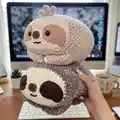
About This Giant Sloth Amigurumi Pattern
This pattern creates a giant three-toed sloth plush worked mostly in the round with jumbo chenille yarn for a super squishy finish. It includes instructions for the head/body oval, facial felt pieces, tuft detail, and four limbs with sewn claws. The pattern uses large hooks and straightforward shaping, perfect for those who enjoy quick visual progress.
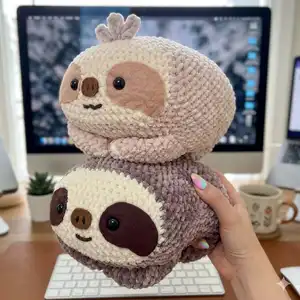
Detailed materials and stitches are listed so you can prepare before starting, and assembly tips help align facial features and limbs for a polished finish. Photos and a printable eye template are included to help with placement and shaping.
Why You'll Love This Giant Sloth Amigurumi Pattern
I absolutely love this pattern because the jumbo chenille yarn creates an irresistibly soft and cuddly texture that makes every sloth feel like a squishy hug. I enjoy how quickly the giant pieces work up — you see big progress in just a few rounds which is very rewarding. I also love adding the felt facial features and little tuft for personality; small details bring each sloth to life. Making Sylvia and Sylvester was so satisfying because they look professional but are made with simple techniques anyone with basic crochet skills can follow.
Switch Things Up
I love how this pattern works with color changes — try a two-tone body by switching to a lighter shade for the belly area for a cute contrast.
You can make a miniature version by using a lighter weight yarn and a smaller hook; just be aware stitch counts will change and you may need to tweak rounds.
I often embellish the face with embroidery instead of felt for a softer look — try stitched eyes or a tiny embroidered nose.
If you want a posable sloth, I add thin wire to the limbs before stuffing to allow gentle posing of the arms and legs.
Try adding tiny crocheted accessories like a scarf, leaf, or tiny hat to give your sloth personality and seasonal flair.
I sometimes use different eye sizes — smaller safety eyes for a subtler gaze or larger for extra cuteness; always secure eyes well with washers.
Swap the hair tuft for a little bow or flower made from felt or yarn to customize the character between Sylvia and Sylvester styles.
To make a firmer shape, use less stuffing and sculpt with strategic stitches during closing, or add a small inner disc of cardboard for a stable base in pillow versions.
I recommend experimenting with slight stitch count adjustments at the decrease rounds if your oval begins to twist; adding or removing a sc can realign the rounds.
If you want a washable version, avoid glued felt pieces and use sewn felt or embroidered features instead, and spot clean the chenille yarn carefully.
Common Mistakes & How to Fix Them
✗ Skipping stitch markers at the start of rounds can make it hard to track shape changes; place a marker at the beginning of each round and move it as you go to stay aligned.
✗ Stuffing too much or unevenly causes lumps and misshapen curves; stuff gradually, fluff the fiberfill apart and insert small amounts for an even, stable shape.
✗ Cutting chenille yarn too close to the finished edge can create loose fibers; leave a bit of yarn and trim carefully, and expect some loose fibers when cutting this yarn type.
✗ Not aligning the decrease start with rnd 6 can make the oval twist or the butt look lopsided; lay the body flat and adjust a few stitches so rnd 24 lines up with where rnd 6 began.