🧢 Beautiful ✨ Detailed πŸ’ Adorable

Clownfish Amigurumi Pattern

Clownfish Amigurumi Pattern
4.7β˜… Rating
2-4 Hours Time Needed
1.5K Made This
βœ‚οΈ

Intermediate Level

Ideal for those with basic crochet experience, featuring slightly more advanced stitches and techniques to expand your skills.

⏱️

Bite-Sized Project

Finishes in 2-4 hoursβ€”perfect for an afternoon of creative relaxation.

πŸ₯

Charming Critter

Delightful animal designs with sweet details that capture the essence of your favorite woodland and farmyard friends.

About This Clownfish Amigurumi Pattern

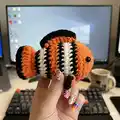
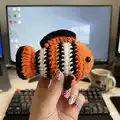
This pattern guides you through crocheting a striped clownfish amigurumi worked from the body up to the tail with no-sew construction. It features simple shaping and color changes to create classic clownfish stripes. Youll pick up yarn for dorsal fins and attach safety eyes for an expressive face.

Clownfish Amigurumi Pattern crochet pattern - detailed view of completed project

Includes step-by-step row instructions, dorsal fin construction, and finishing notes. Suitable for crafters who know basic amigurumi stitches and want a quick, adorable make.

Why You'll Love This Clownfish Amigurumi Pattern

I absolutely love this pattern because it turns simple stitches into a vivid little fish that truly pops with color. I enjoy the no-sew construction which makes finishing fast and tidy, so you spend more time crocheting and less time sewing. The striping technique is playful and allows small changes to personalize each fish. Creating the dorsal fins and picking up yarn lines adds a satisfying finishing touch that makes the piece feel complete.

Clownfish Amigurumi Pattern step 1 - construction progress Clownfish Amigurumi Pattern step 2 - assembly progress Clownfish Amigurumi Pattern step 3 - details and accessories Clownfish Amigurumi Pattern step 4 - final assembly and finishing

Switch Things Up

I love customizing this clownfish by changing stripe widths and colors to create unique variations and personal touches.

I sometimes swap the orange for pastel shades to make a softer, baby-friendly version that still keeps the stripe pattern.

If I want a larger plush, I use a bulkier yarn and a larger hook, which gives a cuddly, chunky fish perfect for little hands.

I often replace plastic safety eyes with embroidered eyes for a fully handmade, child-safe toy that can be washed easily.

I like experimenting with different fin shapes by adding extra DC rows or scallops to create a more dramatic silhouette.

I will occasionally add a loop at the top of the head to turn the fish into a keychain or ornament for quick gifting.

I recommend trying contrast edging on the fins using black to make the fin details pop and match the stripes.

I sometimes embroider small details like cheek blush or tiny bubbles to give the fish a bit more personality and story.

For a mobile or nursery set, I make multiple fish in coordinated colorways and vary sizes by changing yarn weight and hook to create depth and interest.

I encourage you to experiment with yarn textures too; a plush chenille yarn gives a soft, velvety fish that is irresistible to touch.

I like to assemble multiple small accessories like tiny seaweed or shells crocheted in complementary colors to create a themed display.

Common Mistakes & How to Fix Them

βœ— Skipping stitch count checks during rounds leads to uneven shaping; count your stitches at the end of each round and correct mistakes immediately. βœ— Changing colors without securing the yarn can cause loose ends and gaps; carry yarn neatly or weave in ends as you go to keep stripes tidy. βœ— Forgetting to stuff before closing the body creates lumps and poor shaping; stuff gradually starting after round 17 and before final decreases. βœ— Not attaching eyes at the correct rounds will change the face placement; attach safety eyes at R5-R6 apart 8 stitches as instructed. βœ— Working with inconsistent tension will distort the fishs shape and striping; maintain an even tension and consistent hook placement throughout the project.
Clownfish Amigurumi Pattern

Make a charming clownfish amigurumi with clear, step-by-step rounds and simple color changes. This no-sew design builds from the body up to the tail, giving you a neat finish without extra assembly. Youll enjoy the bold orange, black, and white stripes and quick finishing details. Perfect for gifting or adding to a handmade ocean collection.

Intermediate 2-4 Hours

Materials Needed for Clownfish Amigurumi Pattern

β€” Main Fabric

  • 01
    Orange yarn - main color (small amount for body and fins)
  • 02
    Black yarn - accent for stripes and fin edges (small amount)
  • 03
    White yarn - stripe color (small amount for stripe rounds)

β€” Tools Required

  • 01
    Crochet hook (recommended size for amigurumi work)
  • 02
    Safety eyes (attach at R5-R6, apart 8 stitch)
  • 03
    Scissors
  • 04
    Yarn needle for weaving in ends and sewing details
  • 05
    Polyester stuffing
  • 06
    Stitch marker (optional)

Progress Tracker

0% Complete

β€” Body up to the Tail :

Row 1 :

6 SC in an MR (6)

Row 2 :

6 INC (12)

Row 3 :

(SC, INC) 6 times (18)

Row 4 :

(2 SC, INC) 6 times (24)

Row 5 :

(3 SC, INC) 6 times (30)

Row 6 :

30SC (30)

Info :

Change to Black yarn

Row 7 :

30SC (30)

Info :

Change to White yarn

Row 8-9 :

30SC (30)

Info :

Change to Black yarn

Row 10 :

30SC (30)

Info :

Change to Orange yarn

Row 11 :

30SC (30)

Row 12 :

(3SC, DEC) 6 times (24)

Info :

Change to Black yarn

Row 13 :

24SC (24)

Info :

Change to White yarn

Row 14 :

24SC (24)

Row 15 :

(2SC, DEC) 6 times (18)

Info :

Change to Black yarn

Row 16 :

18SC (18)

Info :

Change to Orange yarn

Row 17 :

(SC, DEC) 6 times (12)

Info :

*Stuffing*

Row 18 :

Crochet 2 side together with 6SC

Row 19 :

Turn, 2CH, DC-INC 6 times (12)

Info :

Change to Black yarn

Row 20 :

Turn, CH, 12SC (12)

Info :

Weave in the yarn end and cut

β€” Dorsal Fins :

Part 1: Begin with Orange yarn (Make 2) :

Pick up the yarn from row 8, apart 8 stitch

Row 1 :

(Chains 1, HDC, 3DC, HDC) in one stitch (5)

Info :

Change to Black yarn

Row 2 :

Turn, CH, 5SC (5)

Info :

Weave in the yarn end and cut

Part 2: Begin with Orange yarn :

Pick up the yarn from R7 to R16, in the vertical line from head to tail

Row 1 :

(Chains 1, SC, 7DC, SC) in one stitch (9)

Info :

Change to Black yarn

Row 2 :

Turn, CH, 9SC (9)

Info :

Weave in the yarn end and cut

Info :

Attach the eyes at R5-R6, apart 8 stitch

Assembly Instructions

  • Attach the safety eyes at R5-R6, spacing them apart by 8 stitches as indicated, before or after light stuffing to secure placement.
  • Pick up yarn and make dorsal fins: attach Part 1 by picking up yarn from row 8 apart 8 stitch and sew or secure in place on the top of the body.
  • Make Part 2 dorsal fin by picking up yarn from R7 to R16 in the vertical line from head to tail and secure it on the body line for correct placement.
  • Weave in all yarn ends and cut after completing fins and body rows to finish a tidy edge.
  • Stuff the body gradually during Row 17-18 area to achieve rounded shape and maintain even distribution before closing the tail area.
  • When crocheting two sides together (Row 18), align both sides carefully and stitch evenly to create a neat tail join.

Important Notes

  • πŸ’‘Attach safety eyes at the recommended rounds and spacing to ensure correct facial placement and symmetry.
  • πŸ’‘Weave in yarn ends after each fin and stripe change to keep the stripes clean and avoid loose ends.
  • πŸ’‘Stuff gradually and evenly while shaping to avoid lumps and to keep the body smooth.
  • πŸ’‘Use stitch markers or a contrasting scrap to mark the beginning of rounds if needed for accurate counting.

This cheerful clownfish pattern brings a bright splash of handmade fun to your toy collection. It uses simple striping and no-sew construction so you can finish quickly and enjoy the cute result. Make one for gifts, nursery decor, or to add to an ocean-themed display. 🧢🐠

You ask,

we answer.

FAQs

What size will the finished piece be?

The finished amigurumi size depends on your yarn and hook, but using typical amigurumi tension it will be a small palm-sized clownfish suitable for display or gifting.

Can I change the yarn weight to make a different sized fish?

Yes, changing yarn weight and hook size will alter the final size; thicker yarn and a larger hook will make a chunkier fish while thinner yarn makes a mini version.

Do I need to sew on fins or are they worked in place?

The dorsal fins are picked up and worked onto the body (pick up at rows specified) then secured; minimal sewing or weaving in is required for a neat finish.

When should I attach the safety eyes?

Attach the safety eyes at rounds 5-6 spaced 8 stitches apart as instructed to get the correct face placement.