🧢 Beautiful ✨ Detailed πŸ’ Adorable

Canadian Maple Leaf Coaster Pattern

Canadian Maple Leaf Coaster Pattern
3.9β˜… Rating
2-3 Hours Time Needed
3.6K Made This
βœ‚οΈ

Intermediate Level

Ideal for those with basic crochet experience, featuring slightly more advanced stitches and techniques to expand your skills.

⏱️

Bite-Sized Project

Finishes in 2-4 hoursβ€”perfect for an afternoon of creative relaxation.

🏑

Cozy Accent

A warm touch for your space that transforms ordinary corners into inviting nooks filled with handmade charm.

About This Canadian Maple Leaf Coaster Pattern

This pattern makes a decorative Canadian maple leaf coaster or applique9 by crocheting three small leaves and joining them with a stalk. It features textured ridges created with front and back post single crochet stitches for a realistic leaf look. You'll get a clear row-by-row chart, photo tips, and a diagram to guide assembly.
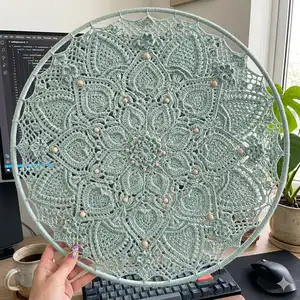
Canadian Maple Leaf Coaster Pattern crochet pattern - detailed view of completed project

Perfect for using up worsted weight scraps, these leaves make sweet coasters, garlands, or applique9s. Wet blocking is recommended to shape and define the edges.

Why You'll Love This Canadian Maple Leaf Coaster Pattern

I absolutely love this pattern because it transforms simple stitches into a beautifully textured maple leaf that looks more intricate than it is. I enjoyed designing the ridged detail using front and back post stitches to give each leaf realistic veins. I also love that it is versatile β€” make a single coaster, a trio as a centerpiece, or applique9 the leaves to scarves and hats. The pattern is compact enough for an afternoon project yet satisfying in the finished result.

Canadian Maple Leaf Coaster Pattern step 1 - construction progress Canadian Maple Leaf Coaster Pattern step 2 - assembly progress Canadian Maple Leaf Coaster Pattern step 3 - details and accessories Canadian Maple Leaf Coaster Pattern step 4 - final assembly and finishing

Switch Things Up

I love how easy it is to customize the maple leaf by changing yarn colors; try autumnal oranges, deep reds, or variegated yarn for unique looks.

If you want a tiny keychain leaf, use sport or fingering weight yarn and a smaller hook to make miniature versions.

For a plumper, more textured coaster, use a bulky yarn and a larger hook for a chunkier result that also doubles as a trivet.

I often add embroidery along the leaf veins after blocking to highlight the texture and add contrast, which really brings out the design.

Mix and match colors for a garland by making several leaves in coordinating shades and stringing them together for seasonal decor.

You can sew a small loop to the top and turn leaves into ornaments, or add a small backing circle to stabilize the coaster if using thinner yarns.

Try felting a wool version gently after blocking (test a sample first) to create a denser, more durable coaster surface.

I also enjoy making sets: stitch three or six leaves in a palette and present them as a hostess gift that feels handmade and special.

Swap the whip stitch assembly for a decorative blanket stitch to add a visible seam and extra color contrast between leaves.

When in doubt, experiment with stitch markers and blocking placement; slight adjustments to pinning will change the finished silhouette in delightful ways.

Common Mistakes & How to Fix Them

βœ— Skipping the foundation chain bottom when working Row 1 can change stitch count; be sure to work across the bottom of the foundation chain as instructed to reach the correct 19 stitches. βœ— Forgetting to place or keep the center marker can make assembly tricky; place a marker in the 9th stitch from finishing and keep the center marker until the leaves are whip-stitched together. βœ— Not working post stitches correctly will flatten the ridges; follow the front post and back post single crochet directions carefully to create raised texture. βœ— Overstuffing or stretching pieces during blocking could distort shape; gently squeeze excess water and pin to shape on a blocking board then let leaves dry completely. βœ— Neglecting to count stitches after increases and decreases can lead to mismatched rows; count at the end of each row, especially after sc2tog and sc4tog rounds.

Canadian Maple Leaf Coaster Pattern

Make a charming Canadian maple leaf coaster or applique9 with this intermediate crochet pattern. You'll create three small textured leaves and assemble them into a realistic maple motif perfect for coasters, decor, or applique9 projects. The pattern uses worsted weight yarn and simple post stitches to create lovely ridged detail. Clear row-by-row instructions, photos, and a diagram help you finish a beautiful handcrafted piece.

Intermediate 2-3 Hours

Materials Needed for Canadian Maple Leaf Coaster Pattern

β€” Main Fabric

  • 01
    Red Heart Super Saver yarn or any worsted weight yarn (Medium / 4)

β€” Tools Required

  • 01
    Crochet hook size 4.5 mm (G)
  • 02
    Tapestry needle
  • 03
    Straight pins
  • 04
    Stitch markers
  • 05
    Blocking board or interlocking play mat
  • 06
    Scissors

Progress Tracker

0% Complete

β€” Small Leaf :

Info :

Make 3 small leaves to complete 1 Maple leaf (diagram 1). Work in rows.

Info :

To beg: ch 10

Round 1 :

(RS) sc in second ch from hook; sc in next 7 chs; 5 sc in last ch; work across the bottom of foundation ch --> sc in next 6 chs; turn = 19 sts

Round 2 :

(WS) ch 1 (do not count as a st here & throughout); [fpsc around post of next st] 17 times (photos a-1 & a-2, page 4); turn = 17 sts

Round 3 :

(RS) ch 1; sc in next 8 sts; 5 sc in next st; sc in next 6 sts; turn = 19 sts

Round 4-7 :

repeat 2 more times rows 2 & 3

Round 8 :

same as Row 2

Info :

Finishing: Fasten off, leaving a long tail for sewing; weave in the end from the beg. Turn & place a MARKER in 9th st from finishing (photo a-3).

β€” Assembling Maple Leaf :

Info :

Place all small leaves next to each other, with the markers meeting in the center (photo b-1).

Info :

With WS facing you, whip stitch the leaves together across 9 sts on the sides (photo b-2). Remove markers as you go from the left and right leaves, but keep the middle MARKER. Weave in the ends on WS.

β€” Leaf Stalk :

Info :

Make 1 (diagram 2, page 7).

Info :

To beg: holding the leaf with RS facing you & with the center marker facing up, work ch 4 (photo c-1)

Round 1 :

(RS) work across the top 9 sts of right small leaf --> sc in first st on the right (photo c-2), sc in next 6 sts, sc2tog; skip st with MARKER & remove the MARKER (photo c-3); work across the top 9 sts of left small leaf --> sc2tog, sc in next 7 sts, ch 5 (photo c-4); turn = 16 sts & 2 chs on each side

Round 2 :

(WS) sc in second ch from hook; sc in next 3 chs; sc in next 6 sts; sc4tog; sc in next 6 sts; sc in next 4 chs (photo c-5, page 6); turn = 21 sts

Round 3 :

(RS) ch 1 (do not count as a st); [bpsc around post of next st] 10 times; ch 10 (photo c-6, page 6); sc in second ch from hook, sc in next 8 chs (photo c-7, page 6); [bpsc around post of next st] 10 times; sl st in last st (photo c-8, page 6) = 30 sts

Info :

Finishing: Fasten off & weave in all the ends on WS.

β€” Wet Blocking :

Info :

Wet blocking is optional, but recommended. Blocking removes creases & adjusts the shape of crochet pieces.

Info :

1. Soak the leaves in warm water; 2. Squeeze excess moisture out; 3. Lay the leaves flat on a blocking board (or interlocking play mat); 4. Shape & pin around the edges (photo d-1); 5. Let the leaves dry.

β€” Diagram Reference :

Info :

See Diagram 1 for Small Leaf and Diagram 2 for Leaf Stalk/seam placement (pages 3 & 7). Each row in the diagrams is highlighted in a different color for clarity.

Assembly Instructions

  • Place the three small leaves with the center markers meeting in the middle so the leaf tips point outward and the markers align at the center.
  • With the wrong sides (WS) facing you, whip stitch the leaves together across the 9 stitches on each adjoining side, keeping the middle marker until the center is secure.
  • Remove the outer markers as you whip stitch from each side, but keep the center marker while you attach the leaf stalk and finish the center.
  • Attach the leaf stalk by crocheting across the top edges as described in the Leaf Stalk section, then fasten off and weave in all ends on the WS.
  • Wet block the assembled leaf on a blocking board: pin the edges to shape, allow to dry fully, then remove pins for a crisp final shape.

Important Notes

  • πŸ’‘Use stitch markers to mark the center and to help align the three small leaves during assembly for accurate placement.
  • πŸ’‘The gauge is not very important for this item and your finished size may vary slightly depending on yarn and hook.
  • πŸ’‘Weave in ends as you go and leave long tails for sewing when instructed to make assembly easier and neater.
  • πŸ’‘Wet blocking is recommended to remove creases and to shape the leaf edges for a professional finish.

This Canadian Maple Leaf coaster makes a lovely handmade accent for your home or a thoughtful seasonal gift. Create a set in varied autumn shades to decorate your table, or applique9 a single leaf to a hat, scarf, or bag for a personalized touch. Happy crocheting and enjoy bringing a bit of handmade autumn charm to your space! 🍁🧢

You ask,

we answer.

FAQs

What size will the finished piece be?

The finished maple leaf measures approximately 8bd" (21.6 cm) from side to side and 7bd" (19 cm) from top to bottom when using worsted weight yarn and a 4.5 mm hook.

Can I make the leaf smaller or larger?

Yes, to make a smaller leaf use a thinner yarn and a smaller hook; for a larger leaf, use bulkier yarn and a larger hook. The pattern notes that gauge is not critical for this piece.

Do I need to know post stitches to make this?

This pattern uses front post and back post single crochet (fpsc and bpsc) to create texture; basic knowledge of these post stitches is helpful and definitions are provided in the pattern.

How long does it take to complete?

Most crafters complete this project in a couple of hours; the pattern estimates approximately 2-3 hours depending on experience and assembly time.